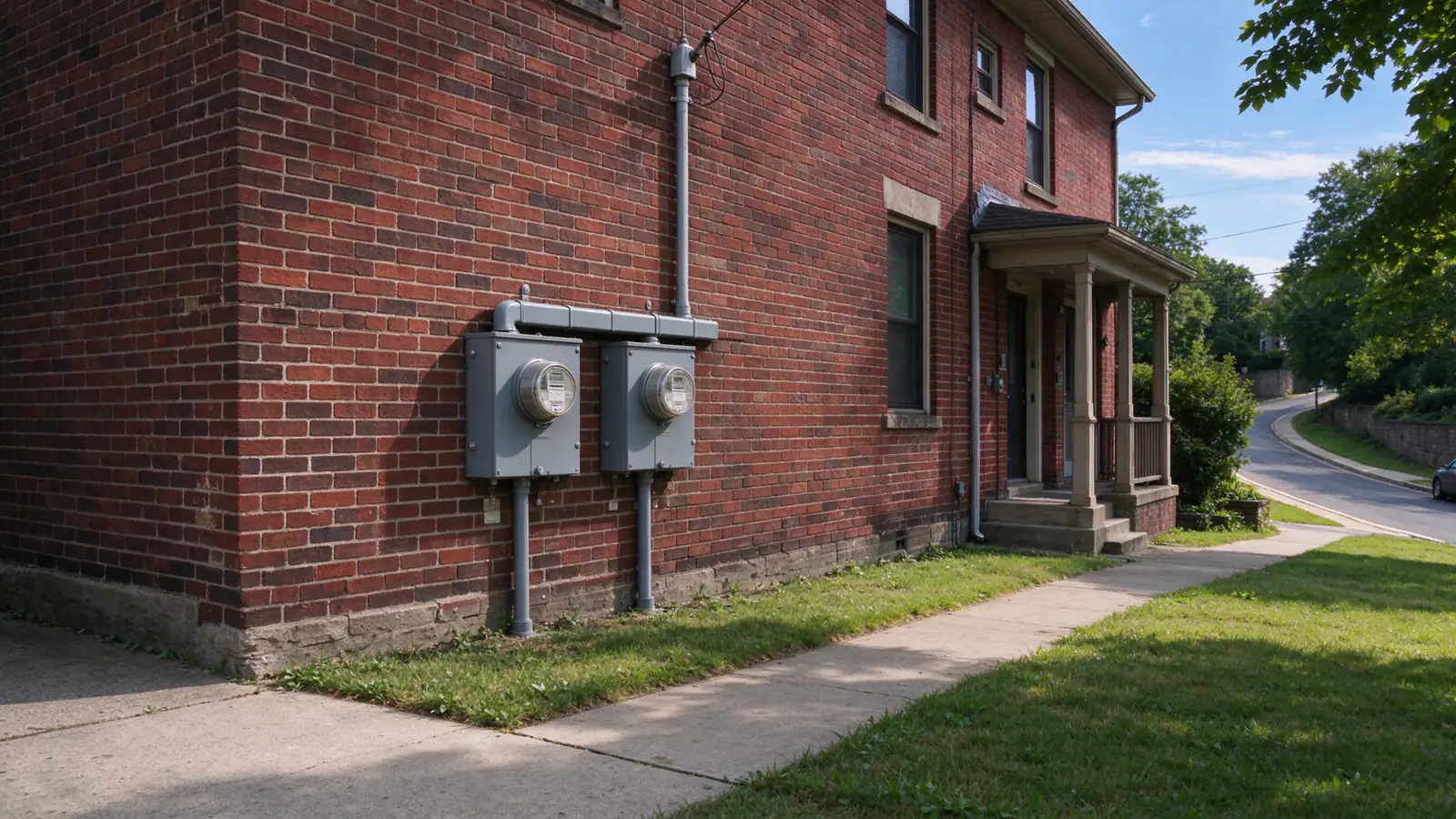
Own a two-family or small building with old wiring?
Residents in place, an insurer asking about every unit. At Conflux Cincinnati Knob and Tube we plan knob and tube rental property rewiring in Cincinnati and Northern Kentucky, from two-families to small apartment buildings and storefronts with homes above.
A rental changes the job in three ways. People live there while we work. Circuits are often shared or crossed between units. And you face an insurance and lending question for the whole property, not one household.
Why is a multi-unit building harder?
Because its wiring rarely follows the units. Cincinnati has far more small multi-unit buildings than most of the country: about one housing unit in five sits in a building of two to four units.
Many of those buildings began as single houses and were split later. When a house was divided, its original K&T circuits were often divided too, without being separated. A hallway light can run from one unit’s fuse; an outlet in the upstairs apartment can be fed from the downstairs panel.
What do we check on the first visit?
We trace every circuit in the building to its panel or fuse box, including any that cross from one unit into another.
We also check fuse sizes against the wire, follow the attic and basement runs and confirm each run live or dead at both ends.
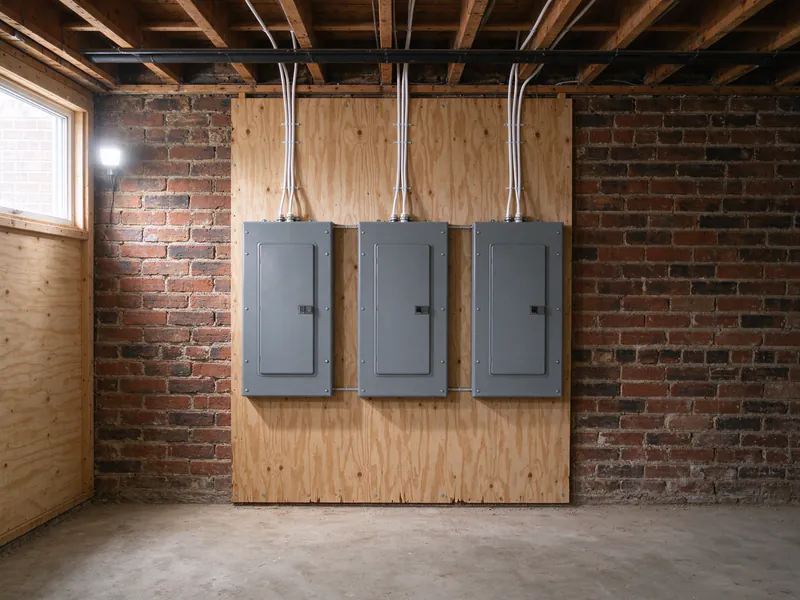
- Unit panels. We match each to the rooms it actually feeds, not the rooms it is labeled for.
- House circuits. We map hall, stair, basement and exterior lights separately.
- Cross-fed circuits. We list them, since they decide the order of work.
- Openings. We count them per unit, so you know each unit’s disruption in advance.
You get a written circuit list for each unit and for the house panel, marked replace now, replace later or already dead.
Can residents stay while we work?
Yes. The order of work matters more than speed. We separate shared and cross-fed circuits first, so we can then rewire each unit without leaving its neighbors dark.
- We map and separate the shared circuits.
- We rewire one unit, or one floor, at a time.
- Every other unit keeps power throughout.
- We use vacancies and lease turnovers where they fall.
- We finish with the house circuits for common areas.
Inside an occupied unit, we turn power off one circuit at a time. We keep a working circuit for a freezer, a home office or a medical device, and in winter each unit’s heating circuit stays in service. Notice and access follow your leases.
How do we reach the upper floors?
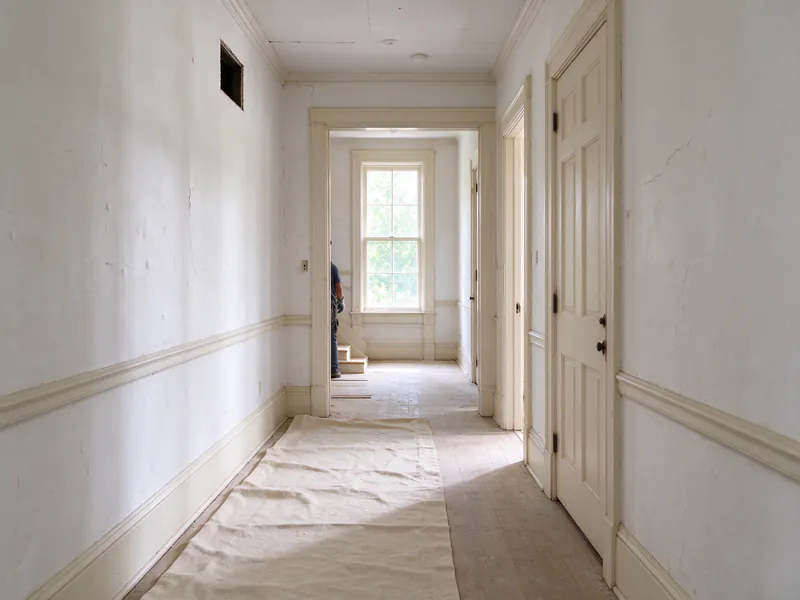
Cable for a top-floor unit usually drops from the attic; for the first floor it rises from the basement. The middle floor is the hard one, reached through closets, chases and small openings at each plate.
Plaster-wall rewiring covers those routes, and the guide to hiring a K&T electrician in Ohio covers the licensing to check on a multi-unit job.
Can each unit have its own panel?
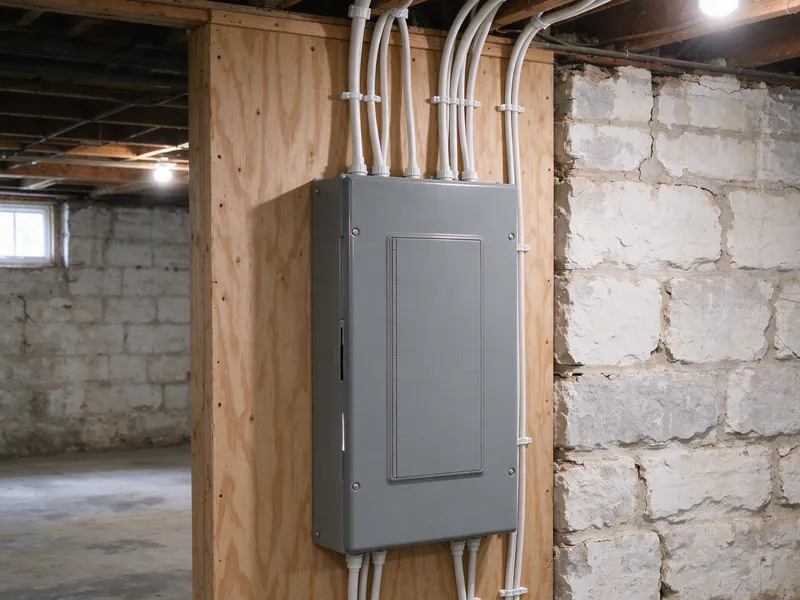
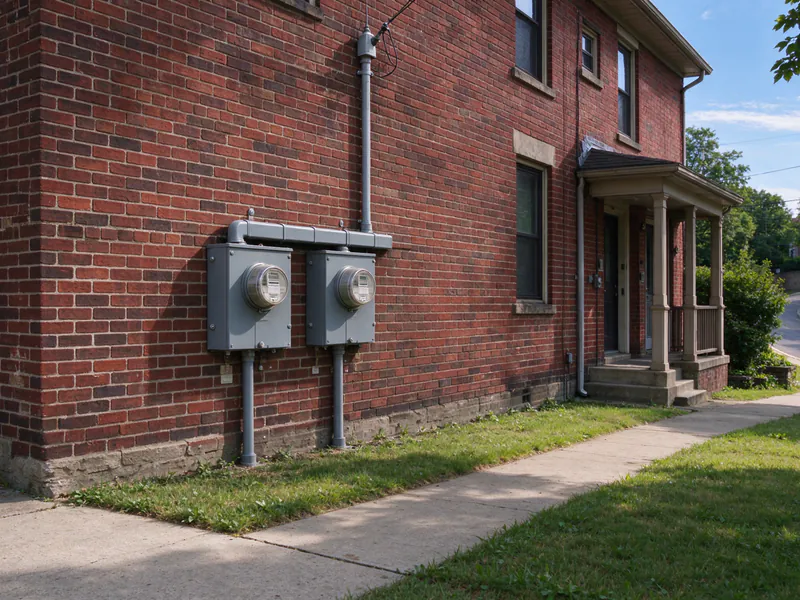
That is the goal: each unit’s circuits start at its own panel, and anything shared runs from a house panel you control. That is what lets us finish, inspect and document one unit on its own.
- Unit panels carry only that unit’s circuits after the rewire.
- A house panel feeds hallway, stair, basement and exterior lights, and any shared laundry.
- Meters follow the panels; IBI adds $25 per house meter to the permit.
What about shared heat in winter?
Where one boiler or furnace serves the whole building, its circuit is a house circuit, and it stays live while we work on the units. The airport averages 4,892 heating degree days a year, so heating is never one of the circuits left down overnight.
Does the size of the building change the rules?
One- to three-family buildings fall under the Residential Code of Ohio, which has used the 2023 NEC since April 15, 2024. Four or more units, and buildings that mix apartments with commercial space, fall under the Ohio Building Code.
| Building | Code | Notes |
|---|---|---|
| Two-family or three-family | Residential Code of Ohio | IBI added-wiring permit by building type |
| Four or more units | Ohio Building Code | References the 2023 NEC; larger jobs can involve IBI plan review |
| Apartments over a storefront | Ohio Building Code | Commercial space planned to its own requirements |
| Kentucky addresses | Kentucky’s adopted code | Permit route confirmed per address |
The Ohio Building Code’s referenced-standards rule, effective October 15, 2025, lists the 2023 NEC. Any rental registration or inspection rule that applies to a building is separate from the electrical permit, and we confirm it for each address.
Got a storefront downstairs?
We take on commercial space too, most often a storefront below apartments. The commercial space usually differs from the units above in wiring method, metering and schedule.
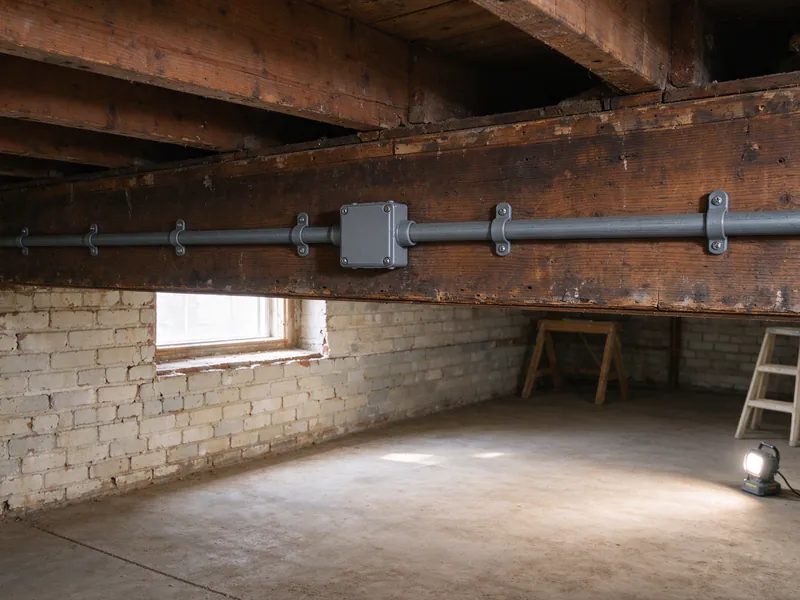
Where the building type or an exposed location calls for it, circuits run in conduit with individual THHN/THWN conductors rather than in cable. Conduit protects the conductors on exposed basement ceilings and shop walls, and it makes later changes easier. The apartments upstairs usually take cable fished through plaster, as any house would.
Will the shop have to close?
We plan storefront work around opening hours, scheduling outages before opening or after close where possible. The residential units follow their own unit-by-unit sequence, so a shop and its upstairs residents are not both without power at once.
What will your lender and insurer see?
Each unit gets its own circuit map and panel directory, and the house panel gets one too. The permit record shows which units are finished. Ohio owners report brokers declining a rental because it still had K&T, so the records matter at renewal.
For the insurance side, see replacement for insurance and the guide to K&T and homeowners insurance in Ohio. Whether K&T can legally stay in service is covered in the guide on whether K&T is illegal in Ohio.
What does a rental rewire cost?
Conflux’s typical rates are about $8 to $17 per finished square foot to rewire a whole building, or $750 to $2,500 per circuit for one unit or phase. Your written estimate, built unit by unit, sets the final price.
- What decides where a building lands: unit count, shared circuits, access, plaster, which units are occupied and any commercial space.
IBI’s permit fees are public: added wiring in an existing two-family is $65 and in a three-family $70, plus the $60 processing fee, so $125 and $130. The Cincinnati electrical permit guide and the Cincinnati cost guide go further. For one building taken whole, see whole-house rewiring; for one unit first, partial replacement.