Only part of the house still on knob and tube?
Old wiring left on one floor, one unit or a handful of circuits? At Conflux Cincinnati Knob and Tube we handle partial knob and tube replacement in Cincinnati. The riskiest circuits come out first, and we write down exactly where the old wiring remains.
It is a complete job on part of the house. We replace each chosen circuit from the panel to its last outlet or light, with new grounded cable, boxes and devices. Everything else stays knob and tube for now, behind a line we draw, write down and hand to you.
What do we check on the first visit?
We trace every knob and tube circuit in the house, not only the ones you hope to replace. A phased plan is only as good as the map behind it, so we test the whole system before anyone picks a phase.
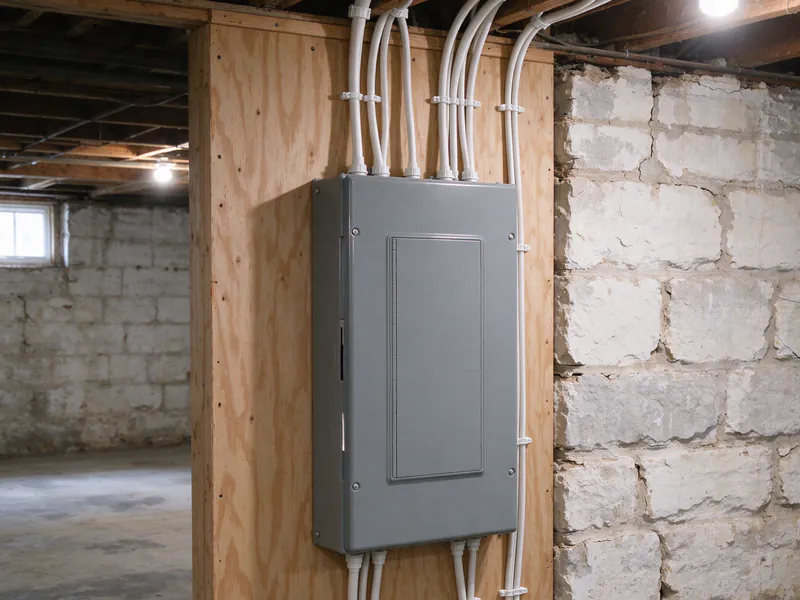
- The panel or fuse box. We match each fuse or breaker to what it feeds and check its size against the wire it protects.
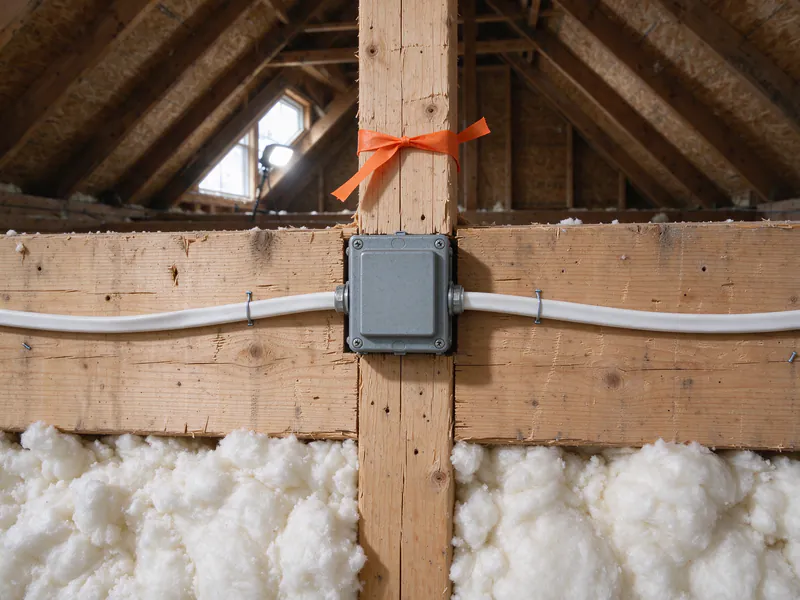
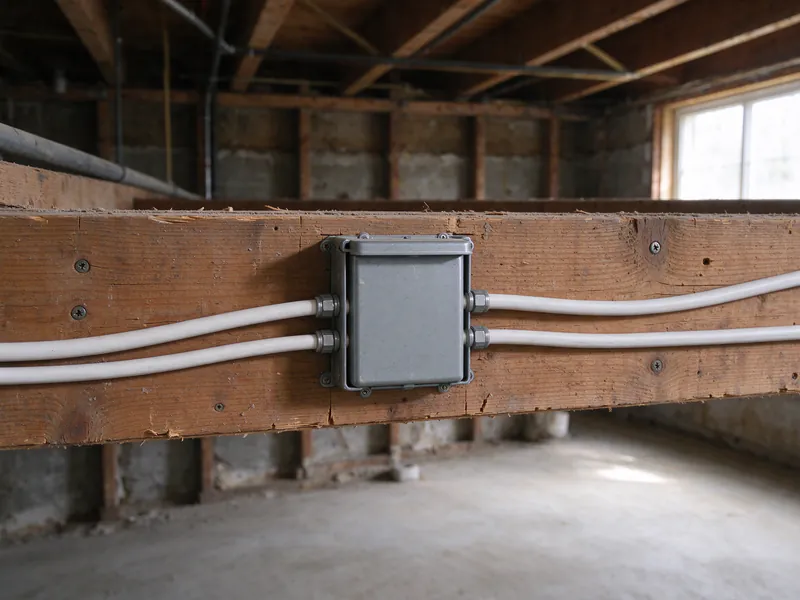
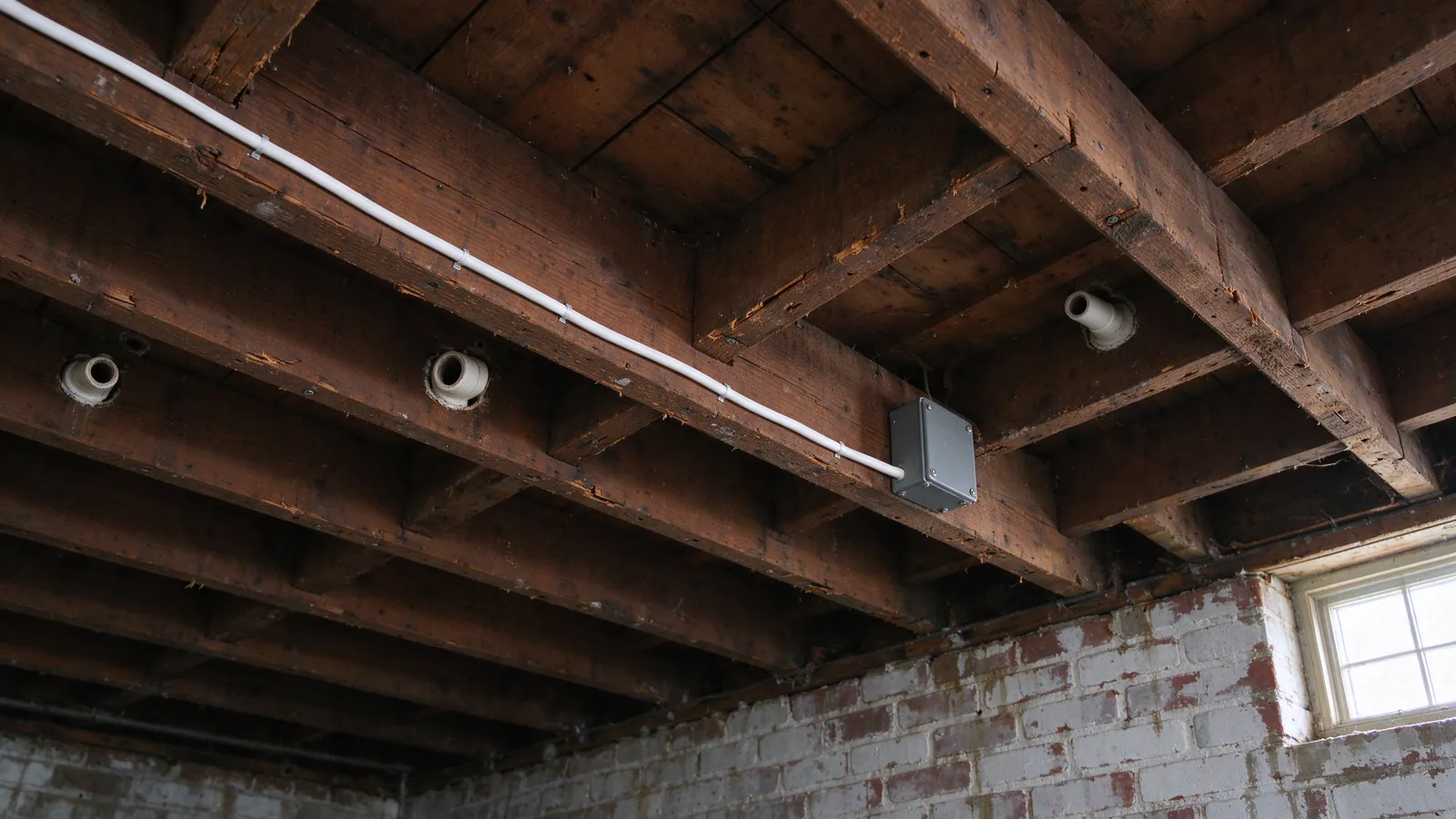
- Attic and basement runs. We follow accessible K&T along the joists and note insulation contact, splices to newer cable and damaged insulation.
- Devices on each circuit. We check outlets, switches and fixtures for heat damage, and test three-prong receptacles for a ground that is really there.
- Live or dead. Testing shows which runs are energized. We mark a run abandoned only after we confirm it dead at both ends.
- Routes. We check paths from above and below for each candidate circuit and count likely openings room by room.
You get a written circuit list, with each circuit marked replace now, replace later or already dead, and the reason. Closed walls limit what anyone can see, so the list says which findings we verified and which we inferred from testing. You can also book the same visit on its own as a knob and tube inspection.
Which circuits should go first?
We order the work by risk and load, not convenience. Circuits that carry today’s heaviest loads, or that sit in conditions the original installer never planned for, go first.
| Circuit or condition | Why it moves up the list |
|---|---|
| Kitchen and bath receptacles | Kettles, microwaves and hair dryers draw far more current than the lamps these circuits were laid out for. |
| K&T buried in attic insulation | Open conductors shed heat into free air; packed insulation holds it in, and the NEC that Ohio adopts restricts that combination. |
| A fuse larger than the wire | A conductor sized for 15 amps behind a 20 or 30-amp fuse can overheat before the fuse ever opens. |
| Splices to newer cable | Each is a joint the original system never planned, often hidden in a ceiling and wrapped in tape. |
| Bedroom receptacles | Space heaters, window air conditioners and chargers run here for hours at a time. |
| Ceiling lights on original wire | Light loads, but heat at the fixture box is where old rubber insulation turns brittle, so condition decides. |
Lighting circuits often come last because their loads are light, and a later phase can take them when your budget allows. Brittle insulation at a fixture changes that ranking at once.
We take particular care with mixed wiring. Where a later remodel tied modern cable onto a K&T run, the new cable’s ground has nothing to connect to, and the old section now carries added load. We separate the two instead of extending the tangle, as the guide to mixed old and new wiring explains.
How will anyone know where the old wiring stops?
A partial job is only useful if the next person can tell where it ends. We put the boundary into records an insurer, a buyer’s inspector or a later electrician can read without opening a wall.
| Record | What it shows |
|---|---|
| Circuit map | Every circuit, the rooms it feeds, and its status: new, remaining K&T or disconnected |
| Panel directory | One labeled line per breaker, with remaining K&T circuits named as such |
| Scope letter | Plain wording such as “K&T remains on these circuits”, never a bare “rewired” |
| Disconnection record | Each retired run, where it was cut at both ends, with photos |
| IBI permit final | The work in this phase was permitted and passed inspection |
Wording matters here. A letter that says “house rewired” while K&T still feeds the second floor can mislead an underwriter and leave you answering for it later. Homeowners report rewires done for a sale that turned out, years afterward, to have skipped the ceiling fixtures.
Do new circuits stay separate from the old ones?
Yes. A replaced circuit is new from end to end. We never splice it back into the old system to save a run, because that would leave a modern-looking circuit with an old section hidden inside it. We disconnect a retired K&T circuit at the panel end and at its last device, then test and record it.
What won’t a partial job fix?
It does not make the remaining K&T safer, add a ground to it, or change what an insurer sees on the circuits left behind. Those circuits stay exactly as they were until their phase comes.
- A new panel on its own. A panel or breaker change replaces the protection, not the wire. Any K&T circuit moved onto a new breaker is still K&T; see fuse box replacement.
- Three-prong outlets. A third slot is not a ground. On remaining K&T, the code-recognized interim step is GFCI protection with outlets labeled “No Equipment Ground”, covered under knob and tube grounding.
- Insulation over old runs. If attic K&T stays live, new insulation still has to wait for it, which is why attic K&T work is often a first phase of its own.
- Capacity. Moving a microwave to a new circuit relieves the old one. It does not upgrade it.
When the list of remaining problems grows long, phases stop saving money. Each one carries its own permit, setup, protection of finishes and patching. If we find K&T in most rooms, one whole-house rewiring project is usually simpler, and it leaves one answer for an insurer instead of “some”.
Will your insurer accept a partial job?
Coverage and acceptance are separate questions. A partial job reduces how much K&T the house has, but each carrier decides for itself whether “some remains” is acceptable. Ohio has no statewide insurance rule on knob and tube to settle it.
Ask your agent before we set the plan, and get the request in writing. Check whether it names “active” knob and tube or any K&T at all, because that wording decides whether disconnecting dead runs counts. Cincinnati homeowners report brokers who could find no carrier while active K&T remained.
How much plaster comes open, and can you stay home?
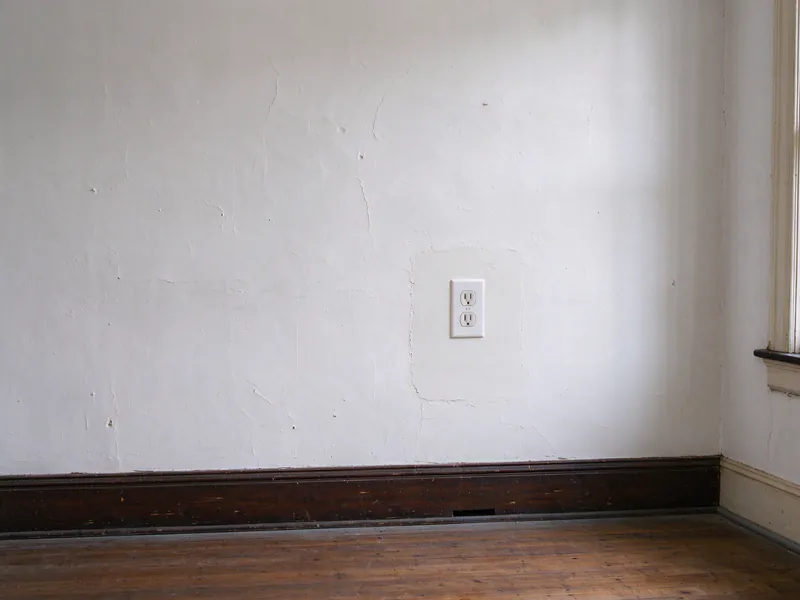
Each phase opens only the rooms it touches. We fish cable from the attic and basement wherever the framing allows, and make small square cuts where fire blocking, or plaster laid straight onto brick, leaves no route.
The estimate lists likely openings per room and says whether patching is in the electrical scope or handed to a plasterer. IBI inspects the rough-in before anything is closed, so patching always follows inspection. Plaster-wall rewiring covers the routing in more depth.

You can stay home. We turn power off one circuit at a time, not the whole house, and keep a working circuit for a freezer, a home office or a medical device. In winter we keep the heating system’s circuit in service.
What does partial replacement cost?
Conflux’s typical range for a partial replacement is $2,000 to $10,000, about $750 to $2,500 per circuit. We price each phase from your circuit list, and the written estimate shows which circuits it covers and sets the final price.
Some costs are fixed and public. Inspection Bureau, Inc. lists the added-wiring permit for an existing single-family home at $60 plus a $60 processing fee, $120 in all, and every phase that alters wiring needs its own. Two-family and three-family buildings are $125 and $130.
The Cincinnati cost guide breaks the rest of the price into its parts, and the primer on what knob and tube wiring is explains why these circuits behave the way they do.