Did your insurer send a letter about knob and tube?
A declined policy or a removal date. At Conflux Cincinnati Knob and Tube we handle knob and tube replacement for insurance in Cincinnati: we scope the work to the carrier’s letter, sequence it to the date and finish with the records an underwriter reads.
We start from the letter, not the wiring. Two carriers can ask for different things in nearly the same words, and the difference decides whether the job is a disconnection record, a few circuits or the whole house.
What is your insurer likely asking for?
There is no single rule. Underwriting differs by carrier and changes over time, and Ohio has no statewide insurance rule on knob and tube. The requests homeowners and agents describe fall into a few patterns.
| What the carrier says | What it usually means for your job |
|---|---|
| No policy while active K&T remains | Every live K&T circuit replaced, dead runs proven and recorded |
| Remove visible K&T in the attic and basement | Exposed runs disconnected and taken out, with the remaining wiring traced |
| Have a licensed electrician inspect it | A circuit-by-circuit report, with its limits stated |
| Replace within a set period | A permitted job sequenced to finish before the date |
An Ohio agency describes carriers that will insure only if the homeowner agrees to replace within a set period, often 30 to 90 days.
Cincinnati homeowners report short policies issued on that condition, and brokers who could find no carrier at all while active K&T remained. The guide to K&T and homeowners insurance in Ohio covers the underwriting side.
What does your letter actually say?
The wording sets the scope. Before we write a price, we match each line of the request to the circuits that answer it.
- “Active” or “any”. A request about active K&T can be answered by replacing live circuits and recording dead ones. A request about any K&T may expect exposed dead runs gone too.
- “Remove”, “replace” or “remediate”. Ask the agent which one the carrier means if the letter is vague, and get the answer in writing.
- Rooms or areas named. Some letters name the attic or the basement only. We can lead with those areas.
- Proof requested. A permit final, photos, a contractor’s letter, or all three. Knowing this early means we never have to recreate anything afterward.
If the letter names no wiring at all, only “outdated electrical”, ask what the underwriter saw. A fuse panel on its own is a different job from K&T; see fuse box replacement.
What do we check on the first visit?
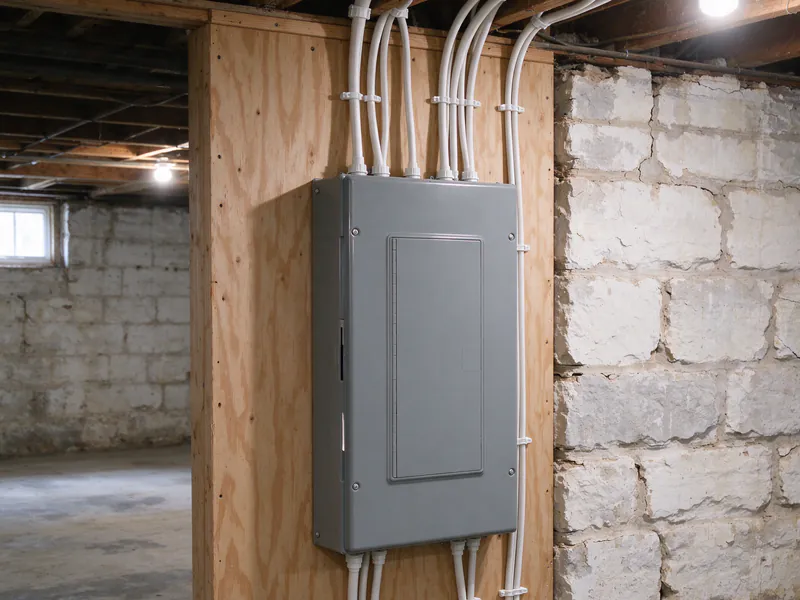
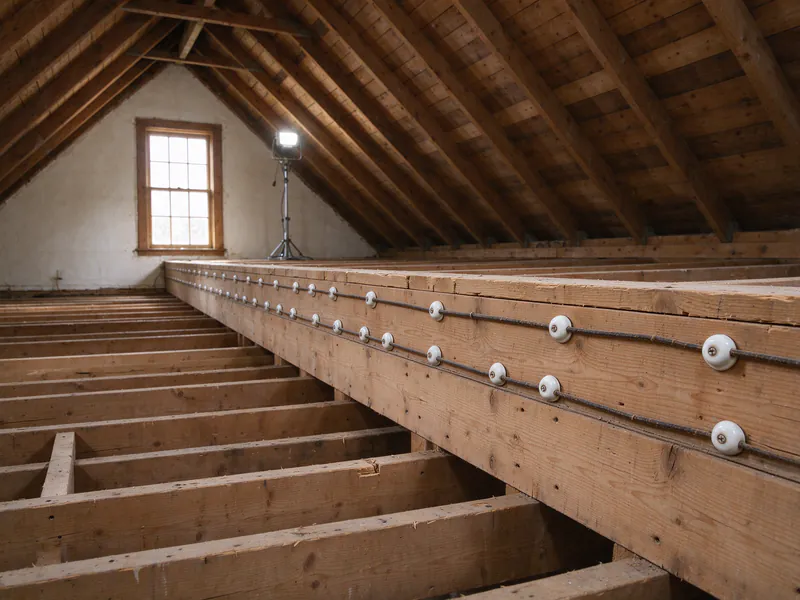
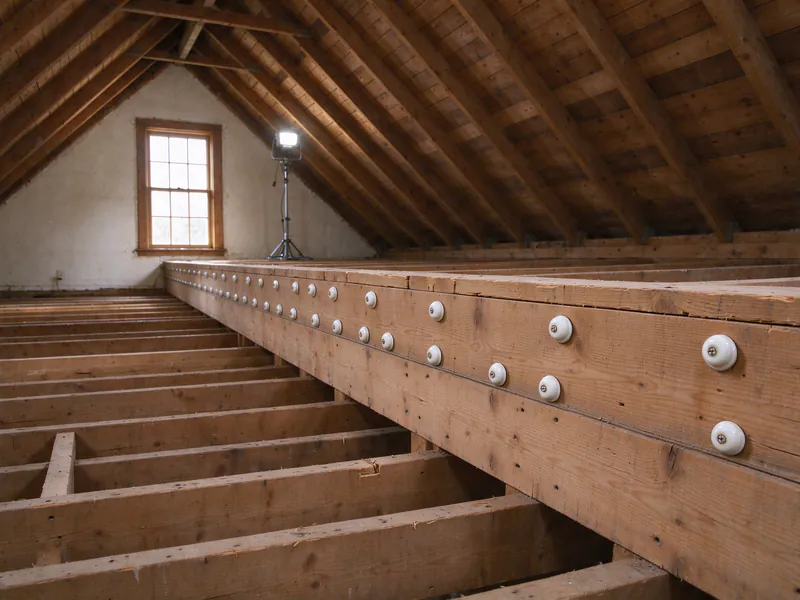
We trace every K&T circuit to its fuse or breaker and mark the ones the letter covers first. We check fuse sizes against the wire, follow the attic and basement runs and confirm each run live or dead at both ends.
You get a written circuit list marked replace now, replace later or already dead, with a note beside each item in the letter showing which circuits answer it. You can also book the visit on its own as a knob and tube inspection.
Can we finish before the carrier’s date?
A deadline changes the order of work, not the standard. We do the circuits the carrier named first, so their inspection and paperwork can follow while the rest of the job continues.
| Step | Who |
|---|---|
| Get the request and the date in writing | You and your agent |
| Trace the circuits and write the scope | Us |
| Arrange the IBI permit before work starts | Us |
| Replace the named circuits first | Us |
| Rough-in inspection before walls close | IBI |
| Final inspection and the packet | IBI, then us |
| Send the packet and ask for written confirmation | You and your agent |
Inspection scheduling is IBI’s, and a failed item means a reinspection at $40 a trip. That is one reason we check the rough-in carefully before we call IBI.

When the date is too close
Ask the agent what counts as progress before the date passes. A signed scope, an open permit and a start date are evidence that work is under way; whether the carrier extends is its decision. Some homeowners bind with a carrier that allows a replacement period, finish the work, then shop the policy again with the packet in hand.
What do you send your insurer?
A packet that answers the underwriter’s questions without anyone opening a wall. It states what we replaced, what we disconnected, and whether any K&T remains, by circuit count.
- Scope letter. Plain wording such as “no active knob and tube remains”, used only when true. If some remains, it says which circuits.
- Circuit map. Every circuit, the rooms it feeds and its status.
- Panel directory. One labeled line per breaker.
- Disconnection record. Each retired run, where it was cut, with photos.
- IBI permit final. Proof the work was permitted and inspected.
The guide to paperwork insurers accept explains how each record is read, and the guide on active versus abandoned K&T explains why “dead” has to be proven.
Renting it out, doing it in phases or buying?
Each situation changes the request a little. Rental policies can be harder to place: Ohio owners report a broker declining a rental specifically because it still had K&T. Every unit then carries the same question at renewal; two-family and rental rewiring covers multi-unit buildings.
A phased job can satisfy some carriers and not others, so partial replacement works best when the agent has confirmed in writing that “some remains” is acceptable. A buyer facing an insurer before closing should see K&T before closing.
What does replacement for insurance cost?
Conflux’s typical range is $12,000 to $35,000 and up to replace the knob and tube in a whole house, or $2,000 to $10,000 for the remaining runs. The written estimate from your circuit list sets the final price.
The permit is the fixed, public part. IBI lists the added-wiring permit for an existing single-family home at $120, including the $60 processing fee. The Cincinnati cost guide breaks down the rest, and the Cincinnati electrical permit guide explains the inspections.