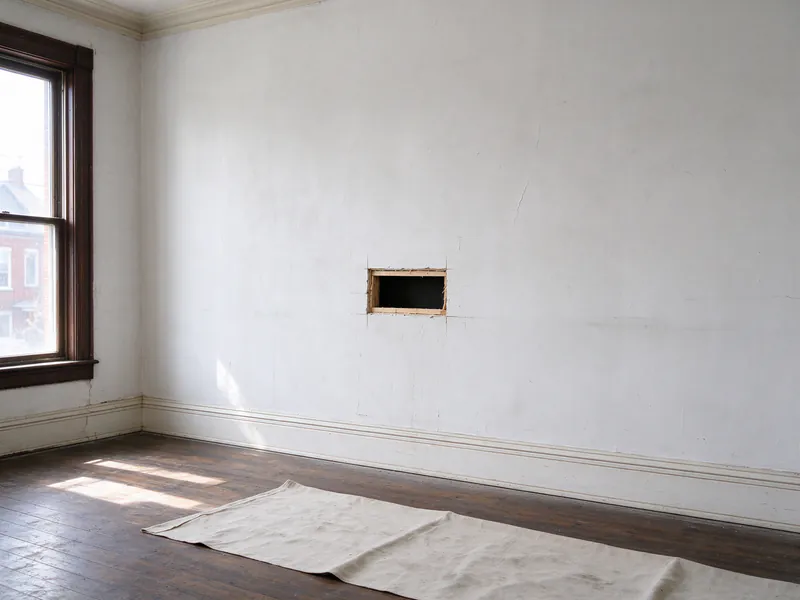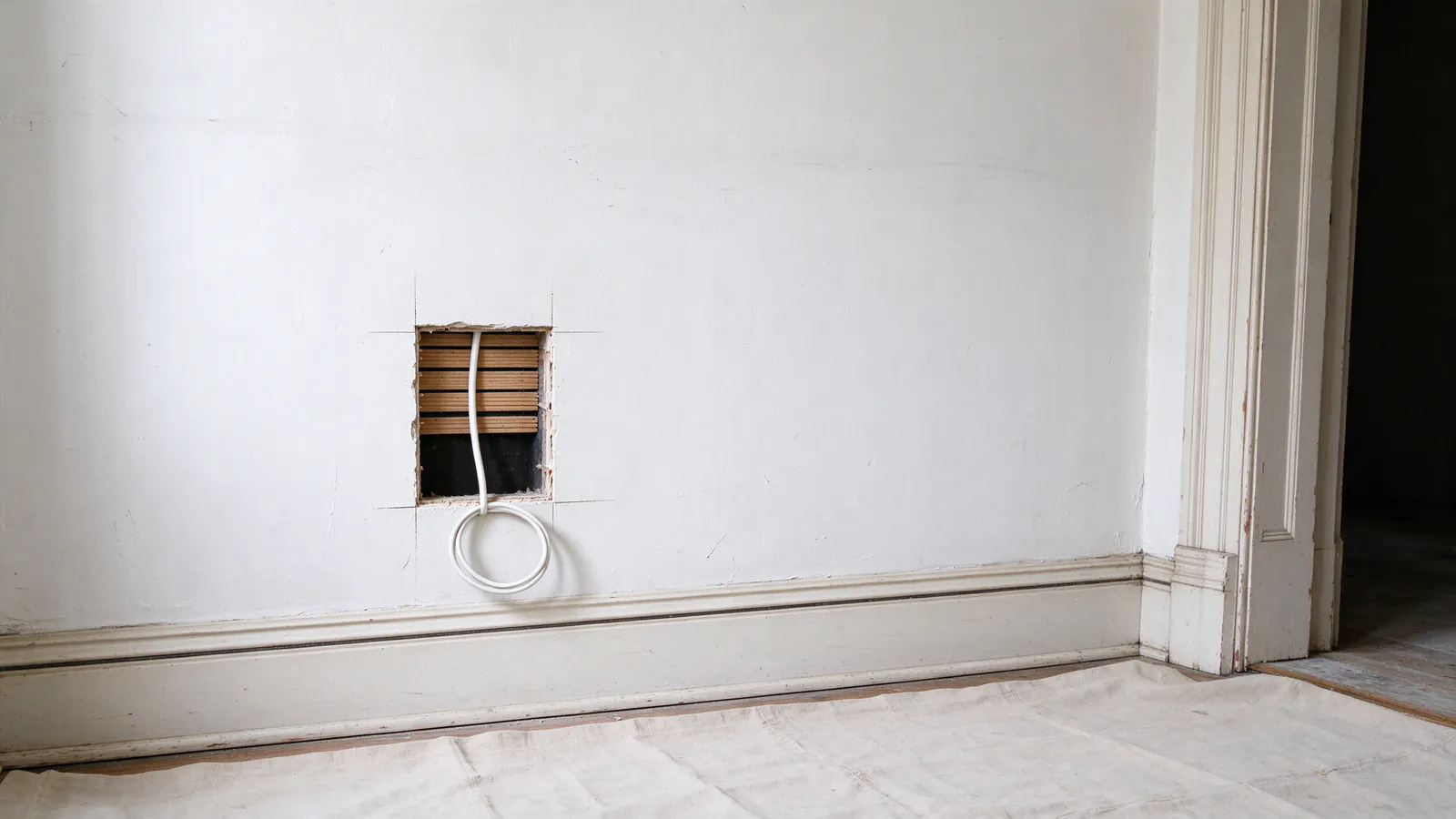
Worried a rewire will wreck your plaster?
It doesn’t have to. At Conflux Cincinnati Knob and Tube we take on rewiring a house with plaster walls across Cincinnati and Northern Kentucky: we plan the routes, run the cable and list every opening before we start.
Plaster changes the method, not the goal. We can’t staple cable along open studs the way you would in a new house, so we work out each circuit’s route before a tool touches a wall. Done that way, a whole room often takes a few small openings, and some rooms need none.
What do we check on the first visit?
We trace every K&T circuit to its fuse or breaker, check fuse sizes against the wire, follow the attic and basement runs and confirm each run live or dead at both ends. Then we turn to routes.
- Framing. We work out whether each wall is balloon-framed, platform-framed, or plaster laid straight onto brick.
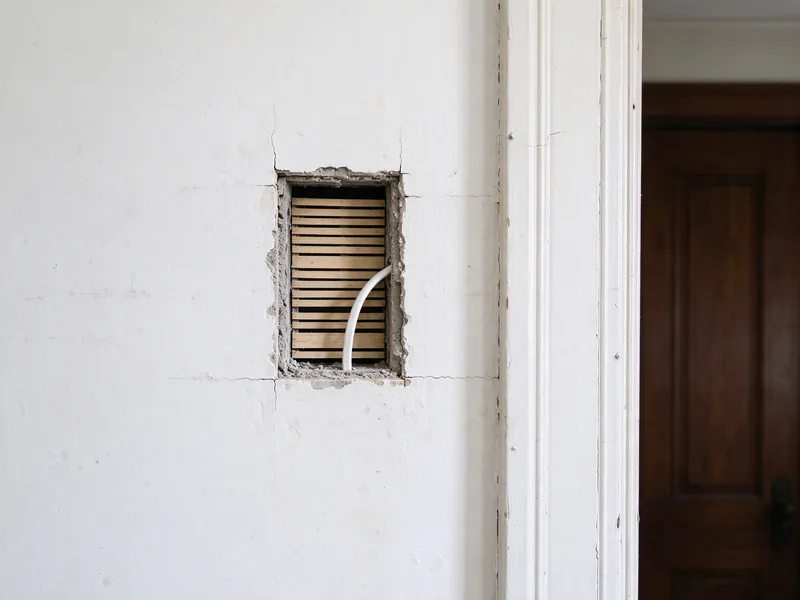
- Bays. Where an existing box allows, we use a borescope to see inside the cavity before anything is cut.
- Finishes. We note trim, ceiling medallions, original fixtures and painted plaster to protect.
- Openings. We count likely cuts room by room and mark them on the plan.
You get a written circuit list and an openings list per room, so the patching question is answered before the work, not after.
How is your house framed?
Framing decides where cable can travel. Many older houses mix types, so we check wall by wall rather than house by house.
| Framing | What it means for routes |
|---|---|
| Balloon framing | Studs run from the foundation to the roof, so a bay can carry cable from basement to attic in one pull, unless a fire block was added. |
| Platform framing | Each floor sits on its own plate, so cable has to pass a plate at every level, often through a small cut. |
| Plaster on brick | No cavity on that wall; routes move to framed partitions, floors and ceilings. |
| Later partitions | Often drywall over studs, the easiest walls in the house to wire. |
How does new cable get into the walls?
We go from the attic down and the basement up first. A receptacle on an outside wall is often fed from the basement through the bottom plate; a switch or ceiling light is often fed from the attic or the floor above.
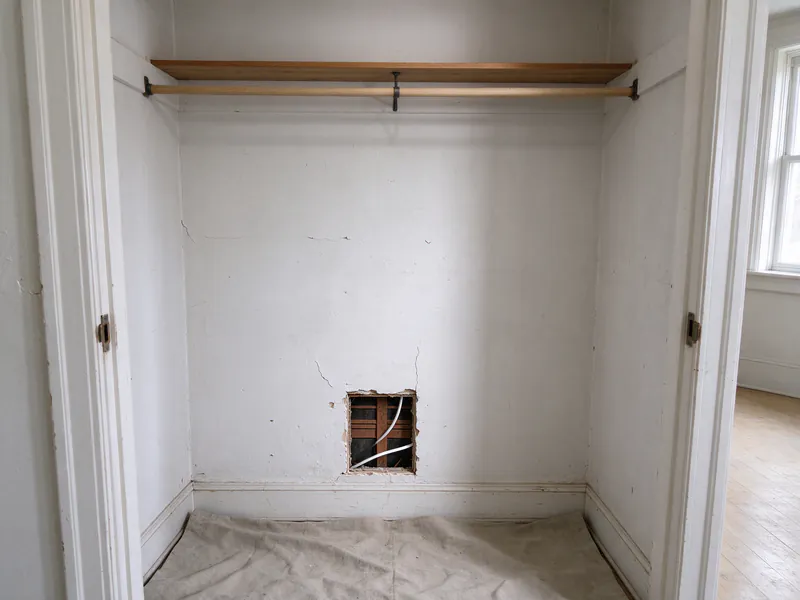
- Closets stacked over each other make a quiet vertical chase.
- Behind baseboards, cable can run along a wall in a shallow channel that the baseboard covers again.
- Above door and window trim, a short opening can be hidden when the trim goes back.
- Through existing boxes, a new cable can follow the route the old one used.
What if something blocks the wall cavity?
A fire block across a bay stops a fish tape. We usually make a small opening at the block, drill through and close it, with the blocking restored. Where cable passes close to the face of a stud, we add the protection the code requires against later nails and screws.
What if there’s no hidden route at all?
Sometimes a wall offers nothing: plaster on brick, no partition nearby, no floor access below. The choices then are a small surface raceway painted to match, a receptacle moved to a nearby framed wall, or a longer route around the room. The plan names which one each such spot gets, so nothing surprises you on the day.
Will we damage your trim or medallions?
We plan not to. Older houses carry finishes worth more than the wiring behind them, so we protect or work around plaster cornices, ceiling medallions, original door casings and painted plaster, and choose routes that avoid them.
We usually lower a fixture under a medallion and rewire it through its existing box. Original fixtures can often be rewired with new internal leads and rehung. In Cincinnati’s local historic districts, interior rewiring with no effect on the outside normally needs no Certificate of Appropriateness; the guide to rewiring in a historic district covers the exterior items that do.
How messy will it get?
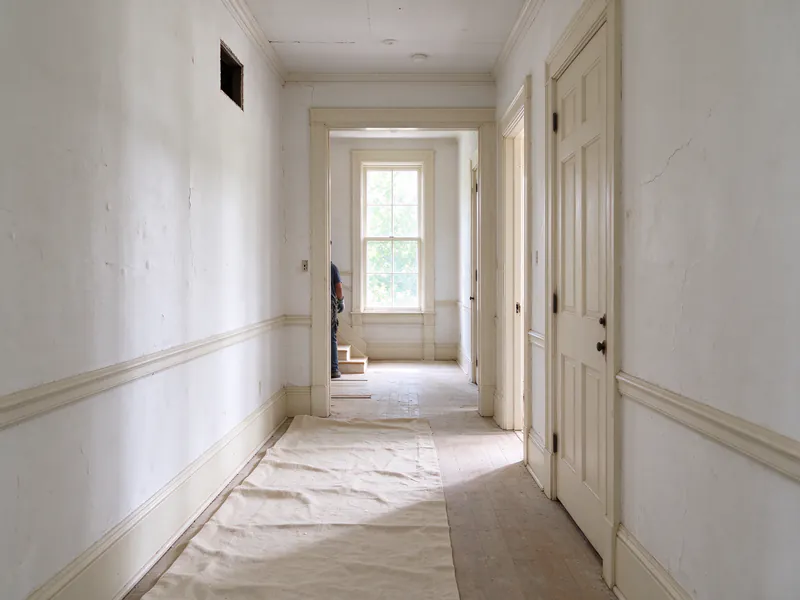
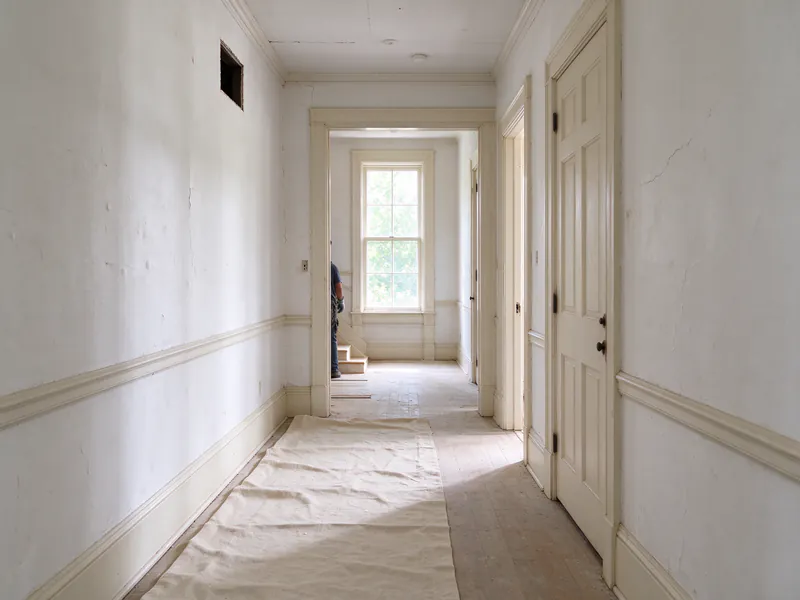
We cover floors from the door to the work, move or wrap furniture, and cut with dust collection. Openings stay open until IBI has inspected the rough-in, which can mean living with a few squares of bare lath for a while.
The guide to preparing for a rewire covers what to clear before work starts, and how long a rewire takes explains where the inspection wait falls.
Who patches the holes?
We always state it in the estimate, because patching is often where expectations part ways. There are three common arrangements.
| Arrangement | What you get |
|---|---|
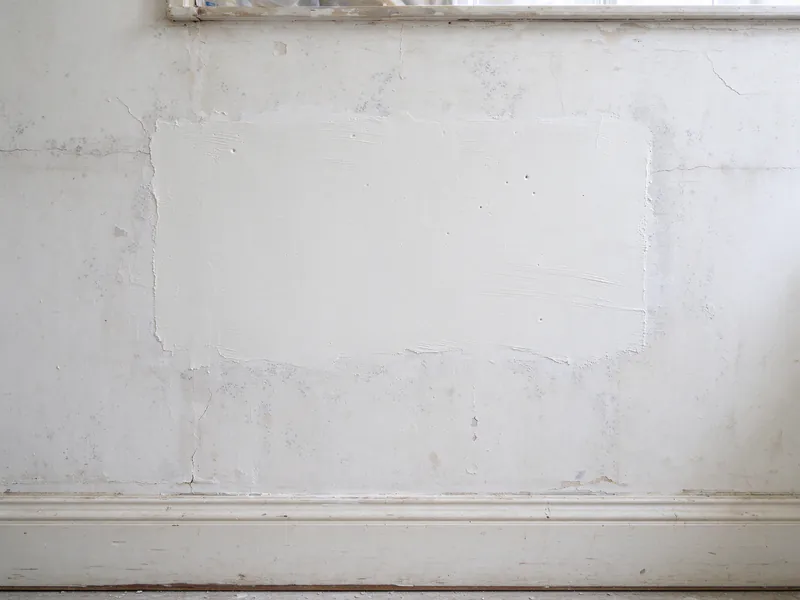
| Patching in the electrical scope | Openings filled and brought flush; paint usually separate |
| Patch-ready for a plasterer | Square, clean-edged openings, loose plaster secured, each one listed by room |
| Owner patches | The same patch-ready openings, with the list to work from |
Order matters. IBI states that it cannot approve installations it cannot inspect, so we close no opening until the rough-in has passed. Patching that starts early has to be reopened.
What does “patch-ready” mean?
Patch-ready is a defined handover, not a loose promise. The openings list gives a plasterer something to price from, which homeowners in older Cincinnati houses report is hard to get before the electricians have finished.
How does plaster change the price?
Conflux typically charges $1,000 to $4,000 to patch the access openings after a rewire, from patch-ready to smooth, before paint. The rewire runs $12,000 to $35,000 and up for a whole house, or $750 to $2,500 per circuit for a partial job.
Plaster adds planning and patch time; it rarely changes the electrical materials. The number of openings, the framing, the trim to protect and the patching arrangement decide where a house lands, and the written estimate sets the final price.
- Plaster on lath costs more to open and patch well than drywall.
- Plaster on brick lengthens routes because the masonry wall carries no cable.
- An open attic and an unfinished basement shorten routes and cut openings.
- Finished basements and flat roofs remove the easiest routes.
For a full job, see whole-house rewiring; for one floor or area, partial replacement. Attics with insulation plans are covered under K&T and attic insulation. The guide to how K&T replacement works follows a circuit from panel to device, and the Cincinnati cost guide prices the drivers.