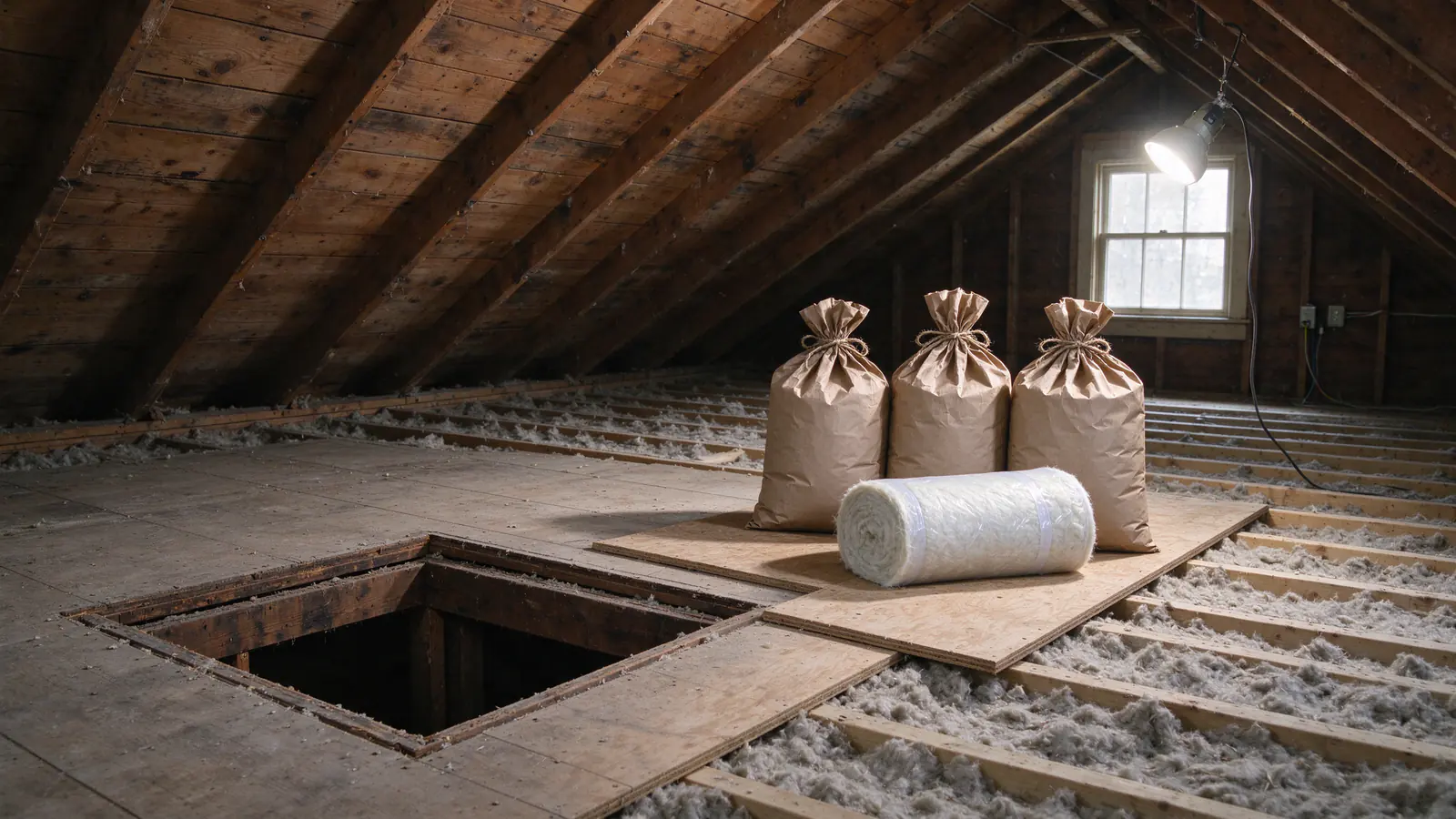
Did the insulation crew stop at the attic hatch?
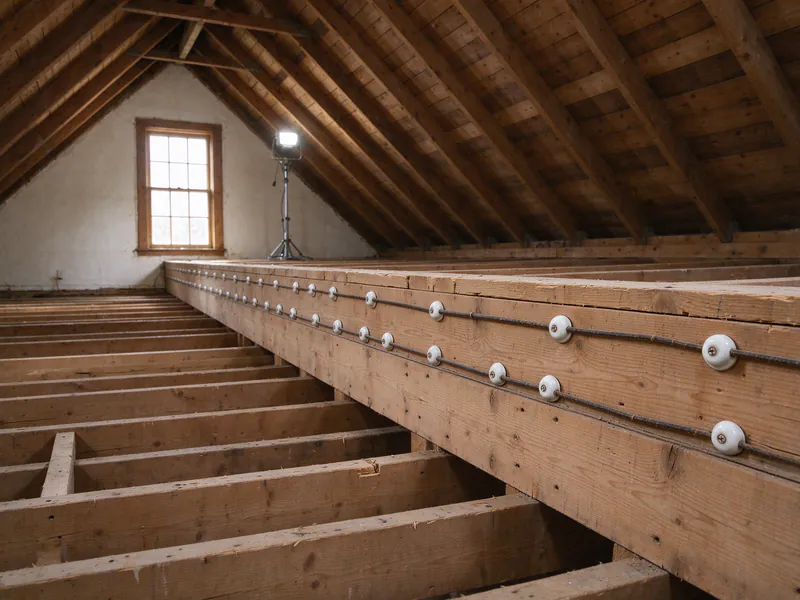
They saw porcelain knobs, and now the job waits. At Conflux Cincinnati Knob and Tube we handle the wiring side of knob and tube attic insulation in Cincinnati, clearing live K&T out of the attic so the insulation can go in.
It usually starts with an energy audit or an insulation quote. Someone looks across the joists, sees the old wiring, and the job halts until the wiring has an answer. We give you that answer in writing, circuit by circuit.
Why can’t they just insulate over it?
Knob and tube was designed to shed heat into free air. Its conductors run apart on porcelain, with nothing around them, and the rating of the old rubber insulation assumes that open air.
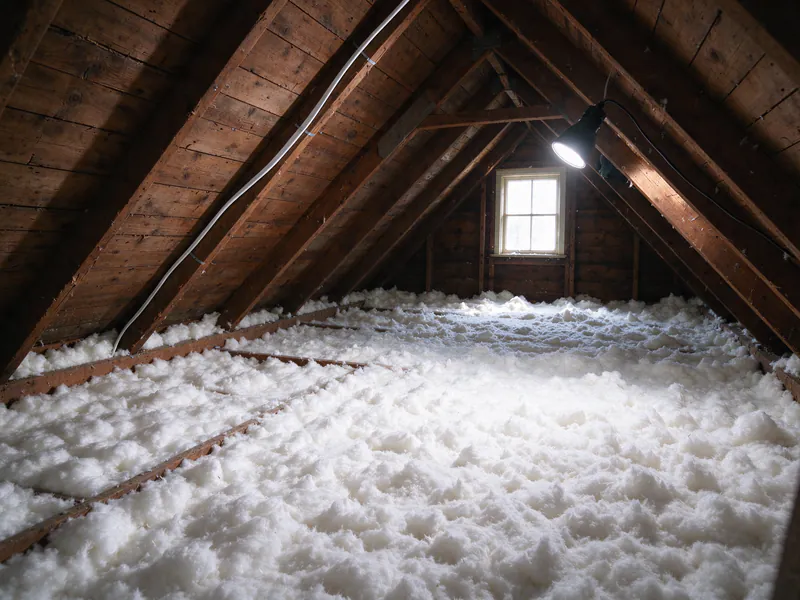
Pack loose-fill or batts around the same wire and the heat stays in. Over years, that ages the insulation on the conductor faster, especially on a circuit that carries a real load. Article 394 of the NEC, which Ohio adopts, does not permit concealed knob and tube in hollow spaces where loose, rolled or foamed-in-place insulation envelops the conductors.
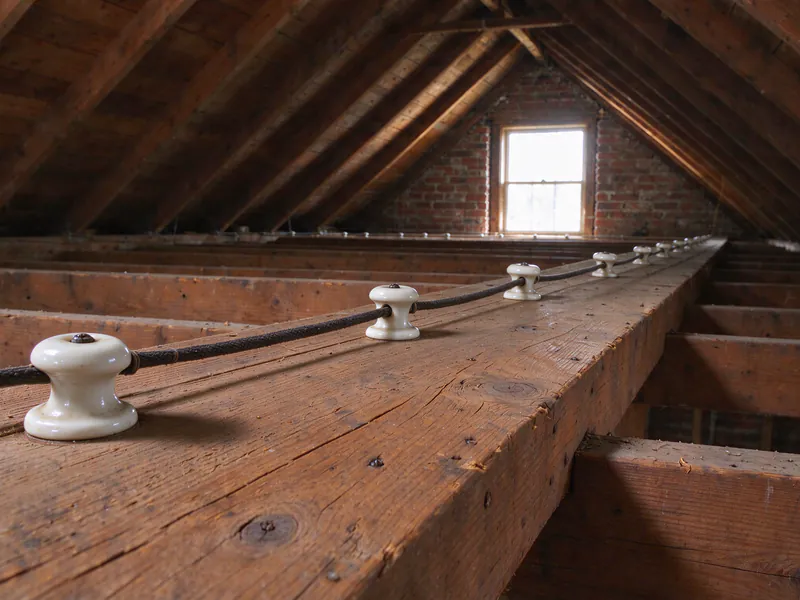
Whose rule is stopping the job?
Ohio’s Home Weatherization Assistance Program and Duke Energy Ohio don’t publish a knob and tube rule of their own for attics. Outside the code’s limit on insulation that envelops concealed K&T, the insulation contractor’s policy decides.
So when an insulation contractor stops at the hatch, the stop is usually their own policy, an insurer’s, or a program’s specific rule. Ask them for it in writing. “Remove all K&T”, “show it is de-energized” and “give us a permit final” are different requests, and each leads to a different scope.
What do we check on the first visit?
We trace every K&T circuit in the house to its fuse or breaker, not only the attic ones, because attic runs often feed the ceiling lights and outlets of the rooms below. We also check fuse sizes against the wire.
- Attic runs. We follow them joist by joist and photograph them.
- Live or dead. We confirm each run at both ends.
- Ceiling boxes. We check the ones we can reach from above for heat damage and splices.
- Top plates. We note where wiring drops into walls, since air sealing works there.
- Wall cavities. We check these too if you also plan blown-in wall insulation.
You get a written circuit list marked replace now, replace later or already dead, and an attic record for the insulation crew.
What happens to each wire up there?
Each run in the attic ends up in one of three groups, and the attic record says which.
| What we find | What we do with it |
|---|---|
| Live, feeding rooms below | Replaced with grounded cable, or rerouted so nothing live stays in the insulation zone |
| Live, spliced to newer cable | Replaced, because the joint is a weak point the insulation would hide |
| Dead at both ends | Disconnected, recorded with photos, and taken out where exposed |
Replacing an attic circuit usually means replacing it to the last device, which reaches down into the rooms below. Where we change only the attic part, the plan says so and records where new cable meets old. Partial replacement explains how that boundary is written down, and knob and tube removal covers proving dead runs.
When can the insulation go in?
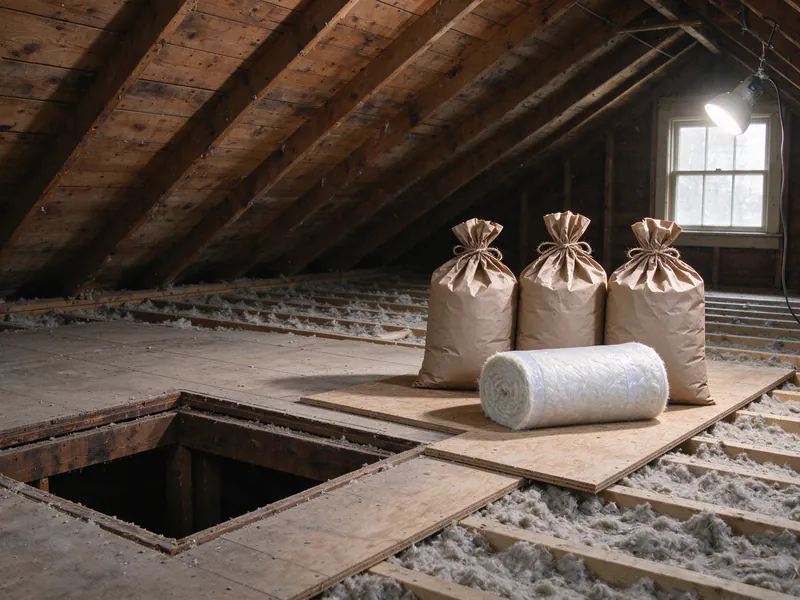
After we finish the wiring and it passes inspection. In between, nothing in the attic should be covered.
- We trace the circuits and write the attic record.
- We arrange the IBI permit for any wiring that will change.
- We replace or reroute live circuits, and disconnect and record dead ones.
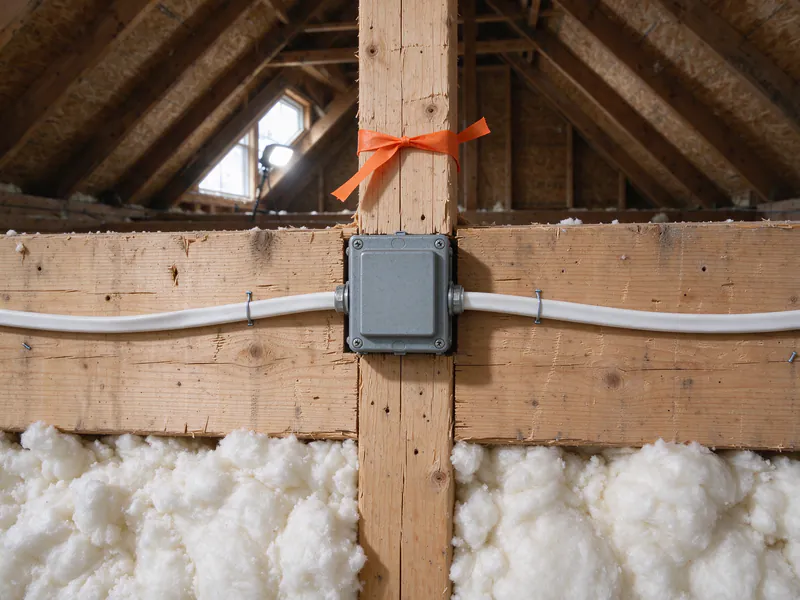
- We place and mark any new junction boxes so they stay accessible.
- The work passes the rough-in and final inspections.
- We hand the attic record and permit final to you or your insulation contractor.
Air sealing belongs after the electrical work too. It happens at the top plates and around ceiling boxes, which is exactly where K&T drops into the rooms below.
What does your insulation contractor get?
A one-page attic record: each run, its circuit number, whether it was replaced, rerouted or disconnected, photos of the cut ends, and where any new junction boxes sit. With the IBI permit final, it answers the hatch question in writing. The guide to paperwork insurers accept uses the same records.
If we find K&T in most rooms, not just the attic, a whole-house rewire may be the simpler project; plaster-wall rewiring explains how the rooms below are reached.
Already insulated over old wiring?
Don’t dig into it yourself. Loose fill hides splices and damaged insulation, and disturbing old conductors is the risk the rule exists to avoid.
We trace the circuits from the panel and the devices first, so we know the live runs before anyone touches the fill.
Replacing around the fill
From there we usually replace those circuits along new paths and leave the old wire disconnected in place. Where we must reach a run, we clear the insulation from that area. The guide on whether knob and tube is dangerous explains why buried K&T moves up the list.
Wall insulation follows the same logic
Blown-in insulation in exterior walls raises the same question for any K&T inside those bays. A wall full of dense-packed fill with live K&T in it is the same conflict as an attic, only harder to see, so we replace wall circuits before any wall is filled.
When should you book, and what does it cost?
Cincinnati winters make insulation worth doing, and they set the calendar. The airport averages 4,892 heating degree days a year, with the low at or below freezing on roughly 100 days.
Plan the electrical work far enough ahead that the insulation crew can follow before heating season, and we keep the heating circuit in service throughout.
- Attic access sets much of the cost: walkable, low or flooring over joists.
- How many attic runs are live and how far they reach into the rooms below.
- Whether wall insulation is also planned.
We replace live attic runs as partial work, which Conflux typically prices at $750 to $2,500 per circuit; the written estimate from the attic’s circuit list sets the final price. Where wiring is altered, IBI’s added-wiring permit for an existing single-family home is $120, including processing.
The Cincinnati electrical permit guide and the Cincinnati cost guide go further, and the guide on active versus abandoned K&T explains what counts as dead.