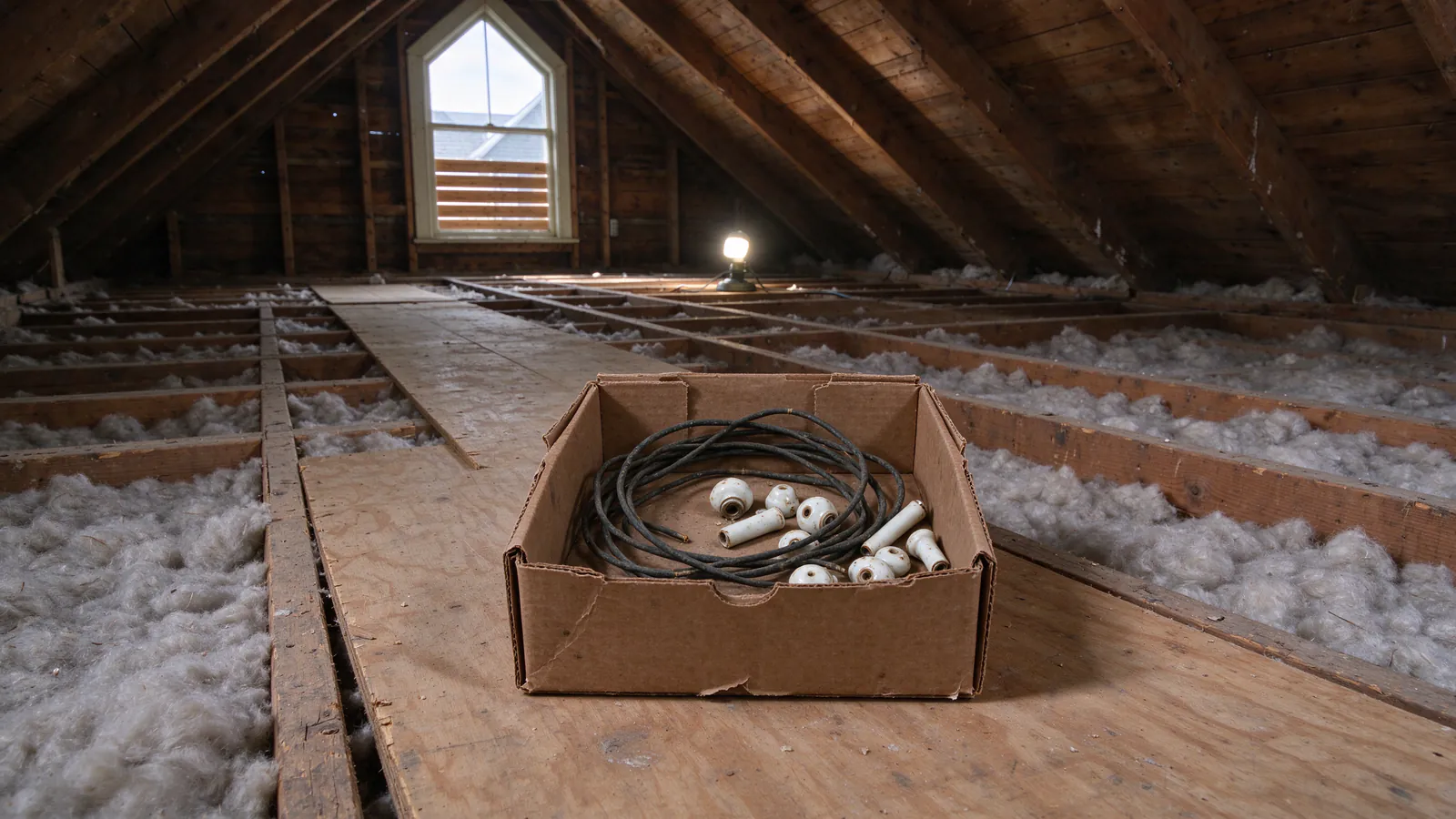
Old wiring hanging in the basement or attic?
You want it gone, and you want proof it is dead. At Conflux Cincinnati Knob and Tube we handle knob and tube removal in Cincinnati and Northern Kentucky: we disconnect old runs at both ends, prove them dead and take out what we can reach.
Removal sounds like the easy part, and physically it often is. The hard part is certainty. A run can look abandoned and still feed a ceiling light, and a run that was abandoned correctly can still confuse the next inspector unless someone wrote it down.
Is that old wire live or dead?
Old wiring sits in one of four states, and only two of them are settled. Our job is to move every run into one of those two.
| State | What it means | Settled? |
|---|---|---|
| Active | Energized and feeding devices | Yes, and it needs replacing |
| Abandoned | Disconnected at both ends, tested, recorded | Yes |
| Cut at one end only | Dead now, but a splice or later repair could feed it | No |
| Unknown | Nobody has traced it | No |
“Unknown” is the most common state in older houses, and it is the one insurers ask about. The guide to active versus abandoned K&T explains why underwriters care about the word “active”.
What do we check on the first visit?
We trace every K&T circuit to its fuse or breaker, check fuse sizes against the wire, follow the attic and basement runs, and confirm each run live or dead at both ends.
- Runs that feed devices. We mark these for replacement first; they can’t come out until what they power is on new wire.
- Runs already dead. We mark these for disconnection and recording.
- Exposed and concealed sections. We separate them, because we handle them differently.
You get a written circuit list marked replace now, replace later or already dead. A full knob and tube inspection produces the same list with condition notes.
How do we prove a run is dead?
We verify it; we never assume it. A non-contact tester can stay silent on a circuit that is switched off, or one fed from an unexpected path, so it is never our only check.
- We trace the run to its source at the panel or fuse box.
- We disconnect it at that source and at its last device.
- We cut the ends back, cap them and tag them.
- We test to confirm the run is dead along its length.
- We photograph both ends and add the run to the record.
Why isn’t cutting one end enough?
A run disconnected only at the panel can be fed again through a splice nobody found, or by a later repair that ties into a loose end in a box. Shared neutrals in old wiring can also carry current from another circuit. We cut both ends, then test, to remove those paths.
Does it all have to come out?
No. Leaving dead wire in place and pulling it out are both legitimate, and most jobs use both. Where the wire is decides which.
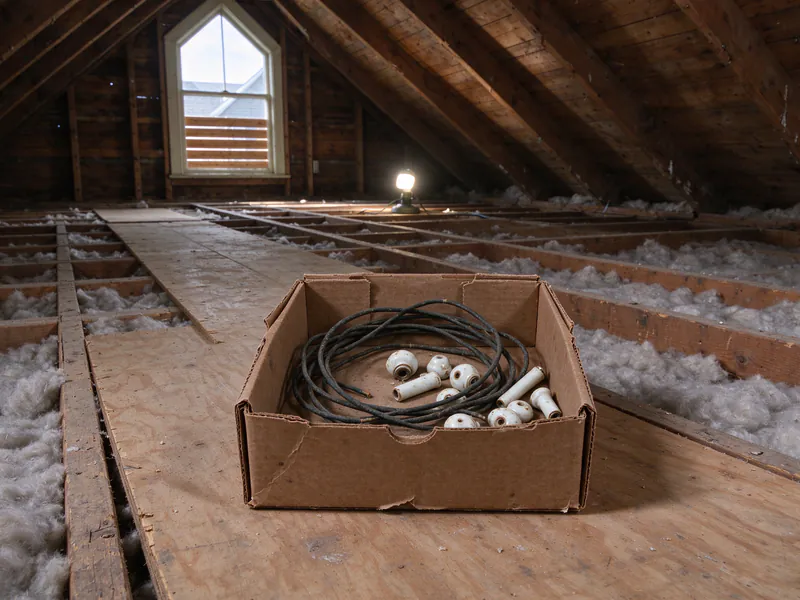
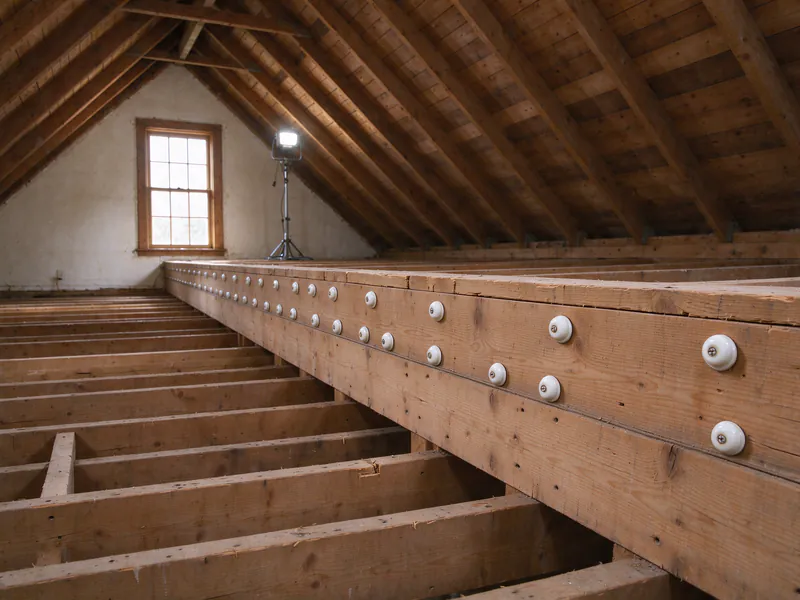
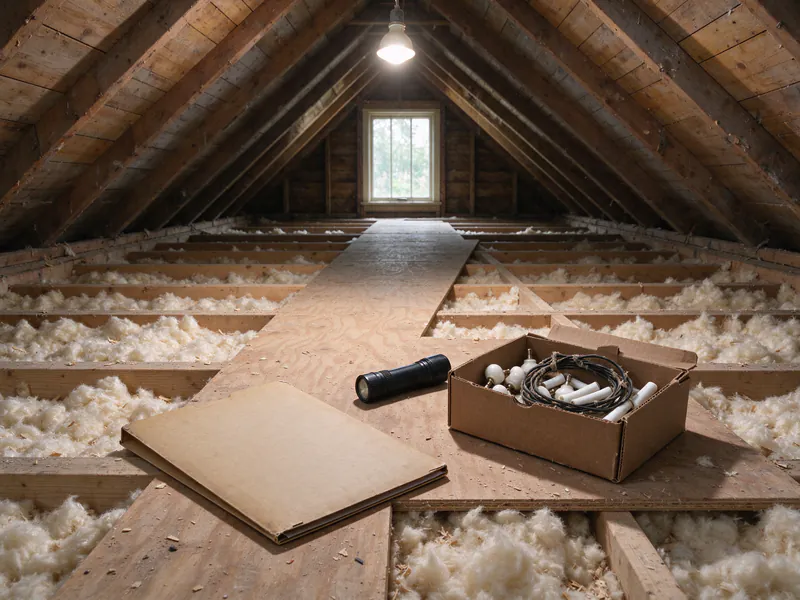
We usually take out exposed runs in basements, crawlspaces and open attics, knobs and tubes included where practical. They are easy to reach, and leaving them invites the next person to write “knob and tube observed” all over again.
What about wire inside your walls?
We normally leave runs inside finished walls and ceilings once they are disconnected and proven dead. Pulling them out would mean opening plaster for no electrical gain, because a dead conductor in a closed wall carries nothing. The code’s concern with old power wiring is what stays connected. We list what stays, so no one has to guess.
Your insurer wants it gone?
Some carriers ask about active K&T; others want visible K&T removed. Removing exposed runs and recording the concealed ones answers most of these requests, but the wording decides. Replacement for insurance covers matching the work to a letter.
Getting a rewire? Removal is the last step
Every rewire ends with removal. Once the new circuits are in and inspected, we disconnect, test and record the old ones, and take out the exposed runs.
Skipping this step is how a house ends up “rewired” with live K&T still feeding a ceiling fixture years later.
What happens where new cable meets old?
On a partial job, some circuits are replaced and others wait. We then remove circuit by circuit and draw the boundary exactly: which runs are retired, which remain live K&T, and where nothing old connects to anything new. We never splice a replaced circuit back into retired wire.
What happens to the old fuse box?
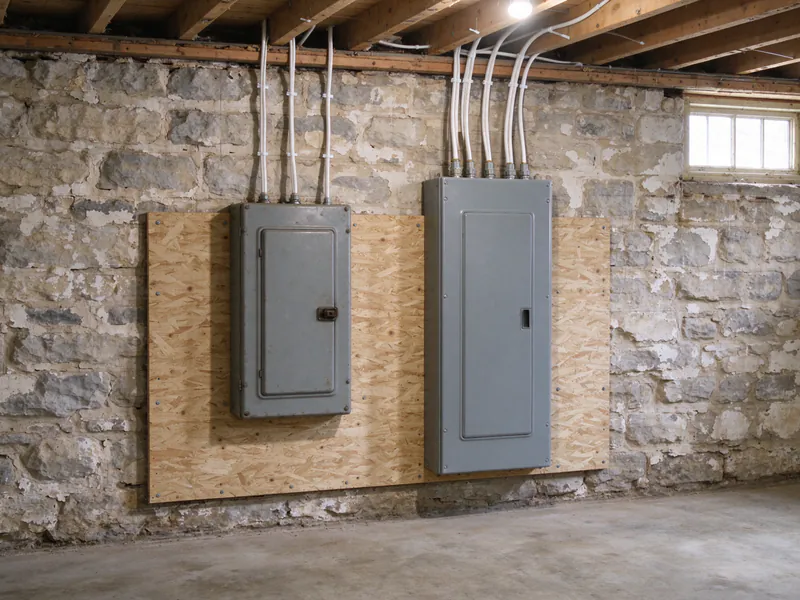
When every circuit has moved to a new panel, we disconnect the old fuse box and take it off the wall, or leave it empty and labeled where removal would damage a finished surface. Either way it goes in the record, so nobody mistakes it for live equipment. Fuse box replacement covers the panel side.
The guide to how K&T replacement works follows a circuit from the first trace to this close-out. If you are concerned about what old wiring insulation is made of, the guide on K&T and asbestos covers it.
What proof do you get?
A removal record, which is what makes the work useful to anyone besides you. It answers an insurer’s or a buyer’s question without opening a wall.
- Each retired run, by circuit number and the rooms it once fed.
- Where it was cut, at the source and at the last device.
- Photos of both ends, capped and tagged.
- What was taken out and what stays in the walls.
- An updated circuit map and panel directory that no longer show those circuits as live.
The guide to paperwork insurers accept explains how underwriters read it, and the guide to K&T and homeowners insurance covers the wider question.
What does removal cost?
We price removal from the trace, which lists each run as live or dead and exposed or concealed; the written estimate sets the final price. We replace live circuits that still feed rooms as partial work, typically $750 to $2,500 per circuit with Conflux.
Where wiring is altered, IBI’s added-wiring permit for an existing single-family home is $120, including processing. Removal ahead of insulation is often paired with attic K&T work, and the circuits that still feed rooms go to partial replacement.