Still screwing in fuses?
Blown fuses, no room for a new circuit, an insurer asking about the panel. At Conflux Cincinnati Knob and Tube we handle fuse box replacement in Cincinnati and Northern Kentucky, on its own or as part of a rewire, under an IBI permit in Cincinnati.
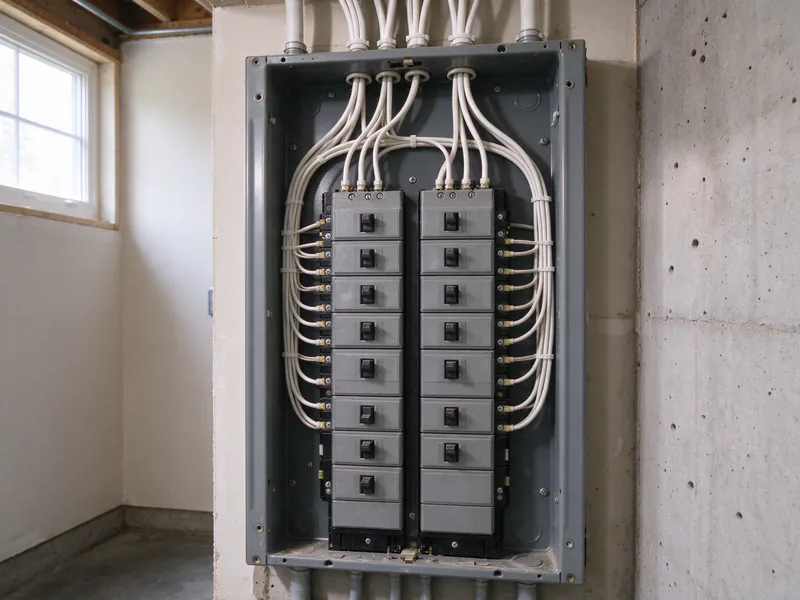
A new panel replaces the protection at the head of each circuit. You get breakers instead of screw-in fuses, room for new circuits, and fuses that were too large for their wire put right. What it does not do is touch the wiring in the walls.
What do we check on the first visit?
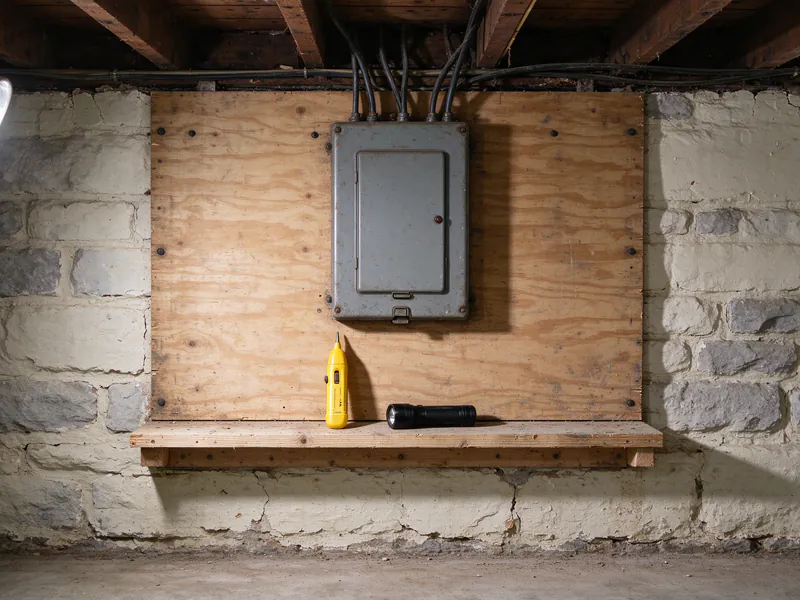
The fuse box is where the original circuits start, so we begin there and follow them out. We match each fuse to what it feeds and check its size against the wire.
- Fuse sizes. We note any 20 or 30-amp fuse on wire made for 15 amps, circuit by circuit.
- Fused neutrals and adapters. We flag older arrangements that can leave a circuit live with its fuse out.
- The service. We check the meter, service conductors, main disconnect and grounding for condition and size.
- Branch circuits. We follow the attic and basement runs and confirm each K&T run live or dead at both ends.
You get a written circuit list marked replace now, replace later or already dead, plus a separate panel and service recommendation.
Has someone put in bigger fuses?
Fuse panels collect alterations. When a fuse blew too often, the quickest fix was a bigger fuse, and a bigger fuse lets a 15-amp K&T conductor carry more current than its insulation was made for.
| Finding | Why it matters |
|---|---|
| Fuse larger than the wire | The conductor can overheat before the fuse opens |
| A fuse on the neutral | The circuit can stay live with its fuse out |
| Type S adapters missing | Nothing stops a larger fuse being screwed in |
| Pennies or foil behind a fuse | Protection bypassed entirely |
| Scorching at a fuse holder | Heat at a loose or overloaded connection |
| More circuits than fuse spaces | Taps and splices added outside the panel |
The guide to K&T warning signs covers what an occupant can notice without opening anything. Changing fuse sizes is never a homeowner fix.
Will a new panel work with your old circuits?
It has to suit the circuits behind it as well as the service ahead of it. Breaker space, listing and grounding all count, and the old circuits keep their limits.
Why might a new breaker trip more than the old fuse?
We move each existing circuit to a breaker sized to its conductor. A K&T circuit that ran on a 20 or 30-amp fuse comes back on a 15-amp breaker, which can mean nuisance trips where the old fuse had been oversized to stop them. Those trips are the circuit telling the truth about its load.
Do you need arc-fault and ground-fault breakers?
Where the code requires AFCI or GFCI protection for the work, we put it in. On K&T, shared neutrals and old splices can make arc-fault breakers trip readily. The guide to AFCI and GFCI on knob and tube explains why, and knob and tube grounding covers ungrounded outlets.
Do you need a bigger service?
We answer that with a load calculation under NEC Article 220, not a rule of thumb. It counts the floor area, the fixed appliances, heating and cooling, and what the planned rewire adds.
| Load | Effect on the calculation |
|---|---|
| Gas heat, gas cooking, no central air | Keeps the total modest |
| Electric range or dryer | Adds a large fixed load |
| Central air or a heat pump | Often the deciding load |
| EV charger | A large continuous load |
| Added kitchen and bath circuits | Small individually, real together |
If your existing service carries the result, it stays and only the panel changes. If not, we upgrade the service in the same project. The guide to K&T and 200-amp service goes further.
Panel, service or both?
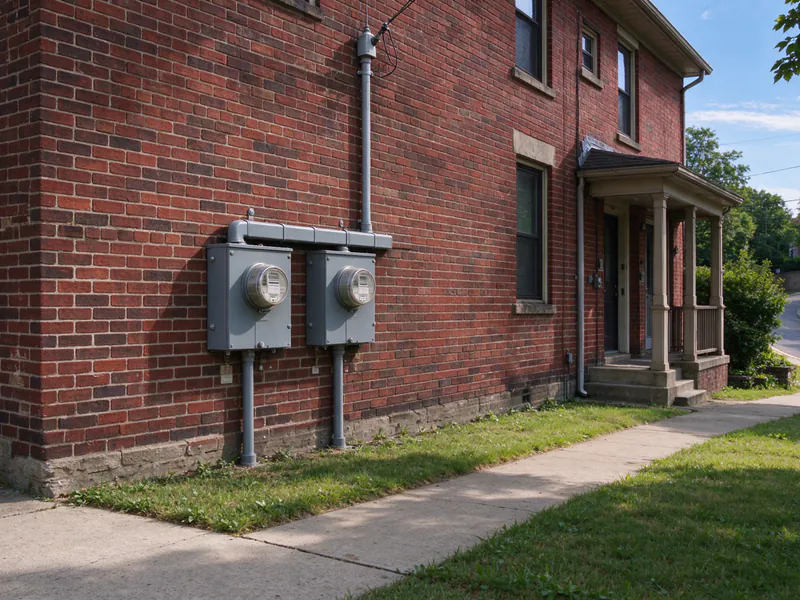
The panel and the service are related but separate scopes. A panel change keeps the meter and service conductors; a service upgrade replaces them, involves the utility, and can bring exterior work.
Will there be work outside the house?
A service change reaches outside the house, and three things follow from that:
- Reconnection. After IBI inspects an upgraded service, it notifies the utility to energize it.
- An outdoor disconnect. The 2023 NEC that Ohio adopted includes an outdoor emergency disconnect provision for one- and two-family homes; we confirm with IBI whether it applies to your service change before we price the job.
- Historic districts. In a Cincinnati historic district, a relocated meter or new exterior equipment can need a Certificate of Appropriateness, covered in the guide to rewiring in a historic district.
How long will the power be off?
The whole house is without power while we move circuits from the old box to the new panel. Tell us in advance about a freezer, a home office or a medical device; in winter we restore the heating circuit among the first. Kentucky addresses follow Kentucky’s code adoption and permit route.
What old wiring is still behind the new panel?
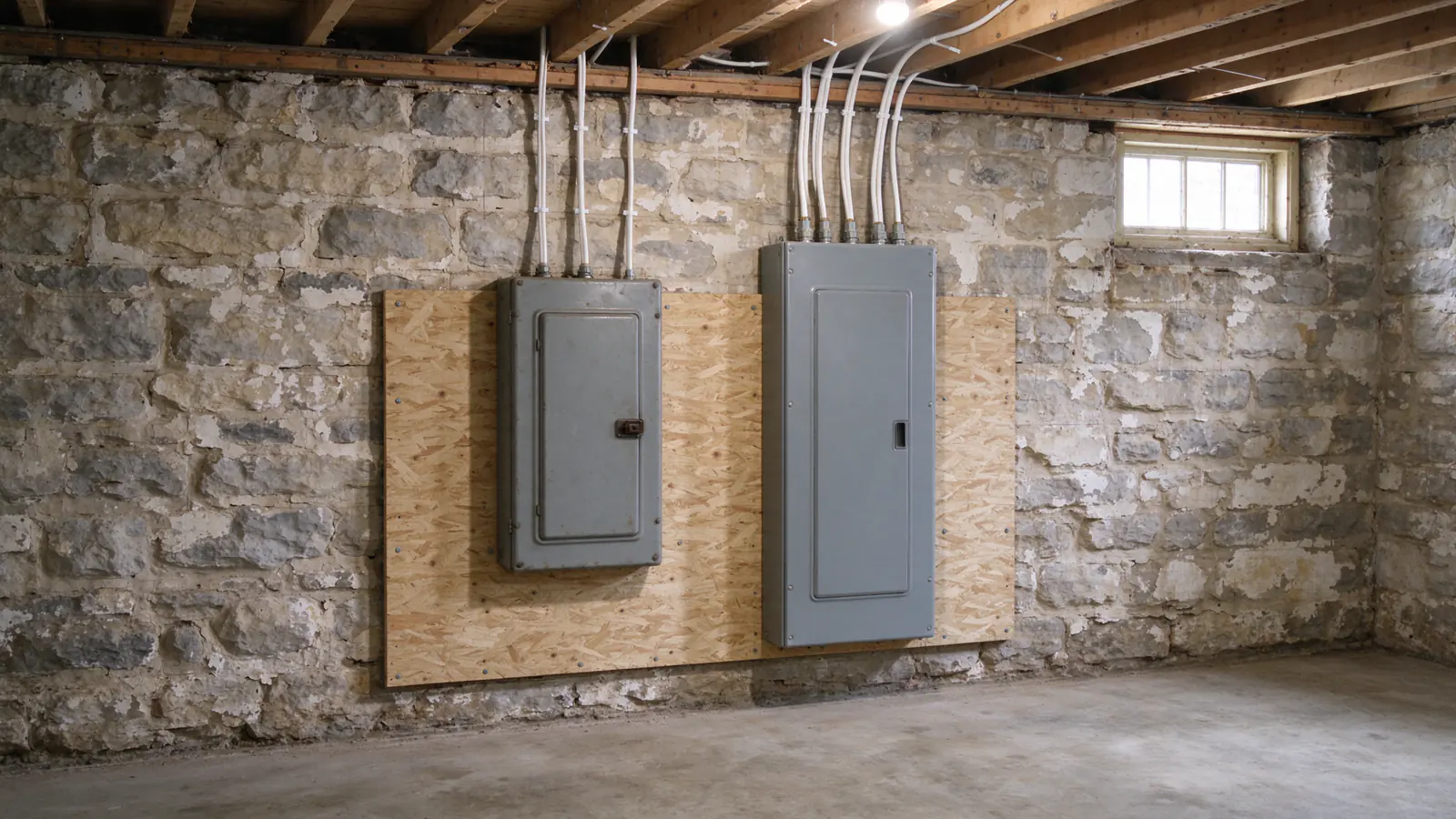
We list every K&T circuit the panel still feeds by number, with the rooms it serves and a plan: replace with the panel job, replace later, or already dead. That list is what keeps a breaker panel from being read as “updated electrical”.
When most circuits on the list are K&T, a whole-house rewire planned with the panel is usually simpler than two projects. When only a few are, partial replacement can take them in order.
What does a new panel cost?
Conflux typically charges $2,000 to $4,500 for a 100A to 200A panel, and $3,500 to $6,000 with a new service mast and meter base. Grounding corrections and the circuits moved over decide where a job lands; the written estimate sets the final price.
IBI’s fees are public. A service-entrance-only permit is $40 for the first dwelling unit and $30 for each additional one, plus the $60 processing fee on every permit; added wiring in an existing single-family home is $60 plus processing. The Cincinnati electrical permit guide explains which applies.