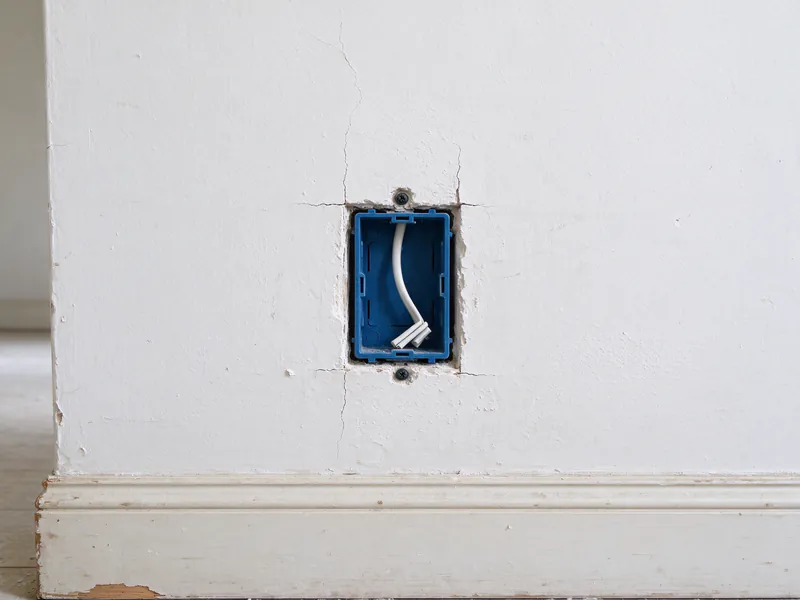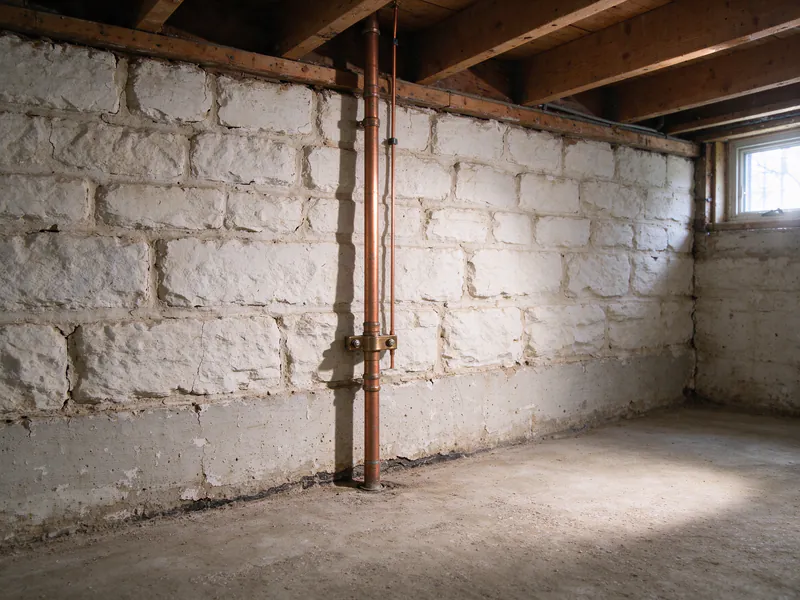
Three-prong outlets, but no ground behind them?
Your tester says “correct”, but the house has old wiring. At Conflux Cincinnati Knob and Tube we handle knob and tube grounding in Cincinnati: we find false grounds, protect ungrounded outlets the way the code allows, and add real grounds where devices need them.
Knob and tube has two conductors, a hot and a neutral, and no ground anywhere in the system. So grounding K&T means one of a few specific things, and only some of them give a device a real ground.
What are you missing without a ground?
An equipment grounding conductor is a separate path back to the panel. It carries no current in normal use. If a hot wire touches a metal case, the ground carries the fault current, the breaker trips, and the case never stays live.
On an ungrounded circuit, the same fault has nowhere to go but through whatever touches the case. That is the shock concern behind every “ungrounded” note on an inspection report. The neutral is not a substitute: it carries current all the time, and it is the return path, not a safety path.

What do we check on the first visit?
We trace every K&T circuit to its fuse or breaker, check fuse sizes against the wire, follow the attic and basement runs and confirm live or dead at both ends. For grounding we add three checks.
- Every three-prong receptacle. We test for a real path to the panel, not just a reading on a plug-in tester.
- Each false ground. We list it by room and circuit number, whether it is an empty ground terminal or a bootleg jumper.
- At the service. We check the grounding electrode conductor and the bonding at the panel, because a branch circuit’s ground ends there.
You get a written circuit list with each outlet’s status, and a recommendation for each: label and protect now, or replace the circuit.
Why does an outlet look grounded when it isn’t?
The most common cause is cosmetic. A two-prong receptacle was swapped for a three-prong one so modern plugs would fit, and the new ground terminal connects to nothing. The outlet looks grounded and is not.
A third slot is not a ground. Inspectors find these in flipped houses and in long-owned ones, and we correct them either way. The correction is cheap per outlet; the risk of leaving them is that someone trusts the third slot.
Is a bootleg ground really a problem?
Yes. A bootleg ground is a jumper from the neutral terminal to the ground terminal of a receptacle. A plug-in tester reads it as correct, which is why it gets used. It is not a repair.
It puts the metal case of anything plugged in onto the neutral. If that neutral loosens anywhere upstream, or the hot and neutral are reversed somewhere on the circuit, the case can become live with nothing to trip.
- It hides the problem from the next person who tests the outlet.
- It gives a surge protector a false reading.
- We take it out and use one of the code’s actual options instead.
What can you put in an ungrounded outlet box?
When you replace a receptacle on a circuit with no ground, NEC 406.4(D)(2) allows three choices. A fourth, under NEC 250.130(C), adds a separate grounding conductor run to an approved point.
| Option | What it does | Required marking |
|---|---|---|
| Two-prong receptacle | Matches the circuit honestly | None |
| GFCI receptacle | Shock protection at that outlet | “No Equipment Ground” |
| Three-prong outlets downstream of a GFCI | Shock protection along the circuit | “GFCI Protected” and “No Equipment Ground” |
| Separate grounding conductor | A real ground at that receptacle | None needed for the ground |
What does a real ground take?
A real ground needs a conductor. On K&T that means one of two things: a separate grounding conductor run to an approved point for a single receptacle, or a new circuit in grounded cable from the panel to the last device.
The separate conductor needs a route through walls and floors, which is most of the work of a new circuit. Using that same route for a new grounded cable usually costs little more, and it replaces old conductors too. That is why grounding work so often turns into partial replacement of the circuits that matter.
Which outlets need a ground most?
Computers, televisions and anything on a surge protector need a ground to be protected as designed. So do appliances that come with a three-prong plug, such as refrigerators, washers and many tools. A table lamp on a two-prong plug does not.
Put another way: rooms with electronics and kitchen counters are the first candidates for grounded circuits. Bedrooms used only for sleep can often wait with GFCI protection and labels.
Label it, or replace the circuit?
The circuit decides, not the outlet. We can label and protect an outlet on an otherwise sound lighting circuit while it waits.
An outlet on an overfused or spliced circuit should not be treated as a grounding problem at all, because it is a replacement problem.
Further reading
The guide to AFCI and GFCI on knob and tube covers protective devices in depth, and the guide on whether knob and tube is dangerous explains which conditions change the answer. Where newer three-prong cable was spliced onto a K&T run, its ground has nothing to connect to; see K&T spliced into newer cable.
What does grounding work cost?
We price grounding from the test results, not per outlet, and the written estimate sets the final price. Where a new grounded circuit is the fix, we price it like partial replacement: typically $750 to $2,500 per circuit with Conflux.
We itemize false-ground corrections and GFCIs separately. Where wiring is altered, IBI’s added-wiring permit for an existing single-family home is $120, including processing. The Cincinnati electrical permit guide explains the inspections.
If the panel itself is a fuse box, see fuse box replacement; grounding at the service is often corrected with the panel. A full knob and tube inspection puts the grounding findings in the context of every circuit, and the guide on whether K&T is illegal in Ohio covers what the code says about leaving it in service.