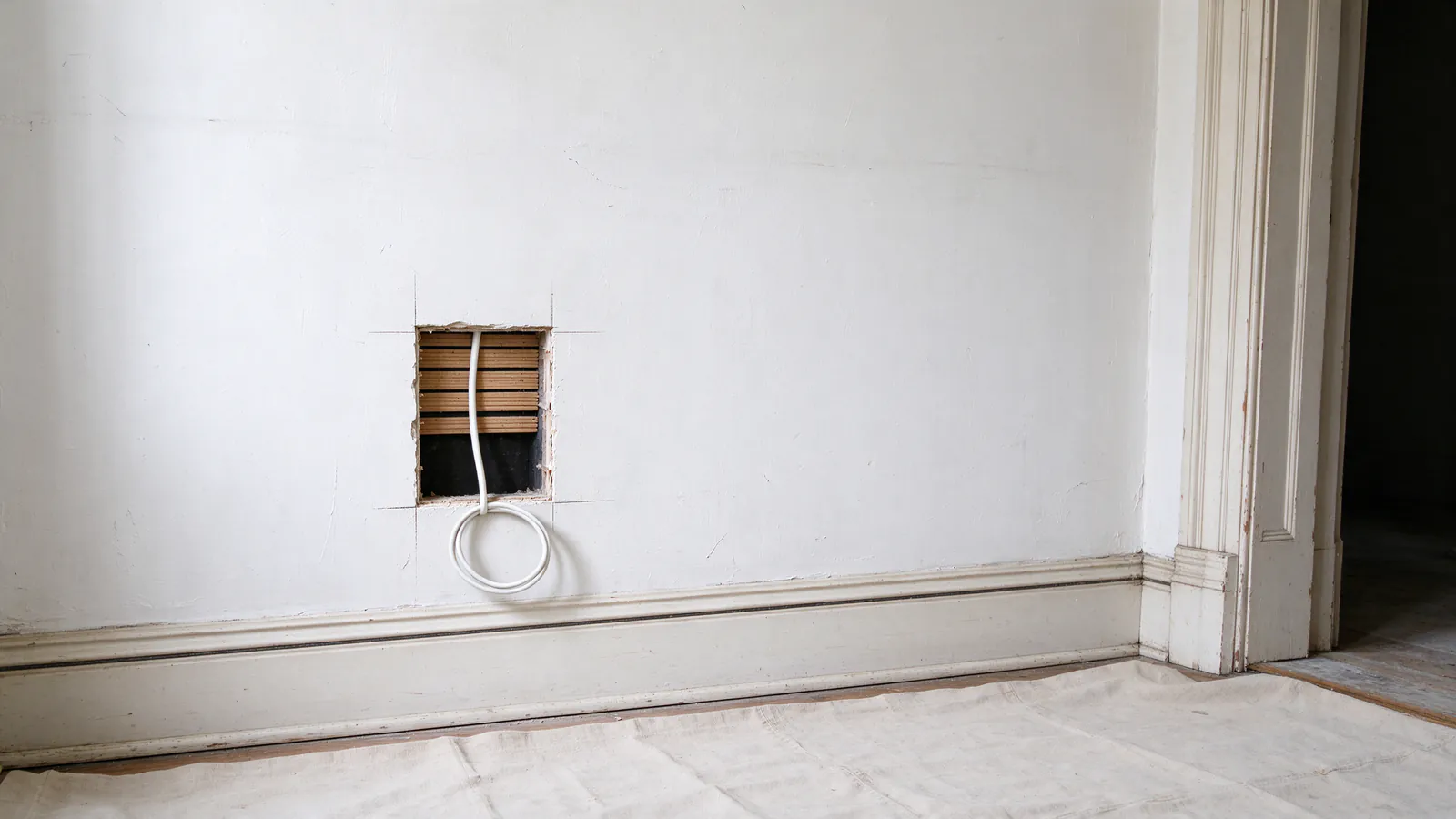
Will you need the City’s approval to rewire inside?
Usually not. Most of the work of rewiring a house in a Cincinnati historic district happens inside, and inside work usually falls outside historic review. The City says its Historic Conservation Office generally reviews only exterior work.
At Conflux Cincinnati Knob and Tube we replace knob and tube in Cincinnati’s historic districts and across Hamilton County and Northern Kentucky. Here’s where historic rules touch a rewire, and where they don’t.
When does the electrical work need a COA?
When it changes what people can see from outside. In a local historic district, exterior changes go through COA review, and service work is the part of a rewire most likely to reach the outside of the house.
| Outside item | Why it can come up on a rewire |
|---|---|
| A new or taller service mast | A service upgrade can change the overhead connection |
| A moved or added meter base | Meter changes, including extra meters in multi-unit buildings |
| An outdoor emergency disconnect | The 2023 NEC as Ohio adopted it includes this provision for one- and two-family homes; we confirm with IBI how it applies to your service change |
| Conduit on a facade | Running cable outside where there’s no interior route |
| New outdoor lights or receptacles | Fixtures and boxes on the building’s face |
Our guide to K&T and 200-amp service explains when service work is part of the job at all.
What if your house is a landmark?
Then stricter rules apply. The City says all exterior changes to an individual local landmark need a COA, and select landmarks have significant interiors, including some publicly accessible spaces, that get reviewed too. If yours is a landmark, we ask the Historic Conservation Office before we plan any interior openings.
Does a building permit change anything?
Yes. If your project needs a City building permit, the City sends it to the Historic Conservation Office automatically. Electrical-only work goes to IBI instead; our Cincinnati electrical permit guide covers that route.
Is your street in a local historic district?
Check the list. City GIS mapping from the Historic Conservation Office shows 27 local historic districts, while the City’s own page counts 28 districts and 57 landmarks. The mapped districts are:
Auburn Avenue, Bella Vista, Betts-Longworth, Bond Hill, Cleinview-Hackberry, College Hill Mid-Business, Columbia Tusculum, Court Street, Dayton Street, East Walnut Hills, Hyde Park Observatory, Lincoln-Melrose, Lytle Park, Main Street, Mohawk-Bellevue NBD, Ninth Street, North Avondale, Northside NBD, Over-the-Rhine, Prospect Hill, Sacred Heart A./Mt. Storm, Sohn-Mohawk, Third-Main Street, Uplands, Warsaw Avenue, West Fourth Street and Woodburn Ave NBD.
- Largest by area. Over-the-Rhine covers 325.6 acres; East Walnut Hills covers 135.8.
- Business districts only. Entries marked NBD cover a neighborhood business district, not the whole neighborhood.
- Not districts. No local district is named Hyde Park Square, Clifton, Westwood, Oakley or Mount Lookout.
Our Over-the-Rhine, East Walnut Hills and Mount Auburn pages cover those neighborhoods’ districts in detail.
What will we find behind the walls of an old house?
Often several generations of wiring at once. Over-the-Rhine is a clear case: by census tract estimates, 72.9% of its housing units were built in 1939 or earlier, against 40.3% for the city.
These are the layers we can meet, oldest first:
- Gas or early electric lighting. Some fixtures were built for gas, or for both, and later converted.
- Knob and tube. The original branch circuits, often still feeding ceiling lights.
- Early cable. Cloth-sheathed cable from the next decades, sometimes spliced into K&T; see cloth wiring replacement.
- Later additions. Modern cable from remodels, often joined to older circuits in the attic or basement.
We trace and record each layer, so your final circuit map shows what we replaced and what, if anything, remains.
How do we protect your original interiors?
No COA covers the inside, but the interior is often why the house matters to you. Plaster medallions, cornices, original trim and decorative ceilings shape where cable can travel and where openings can go.
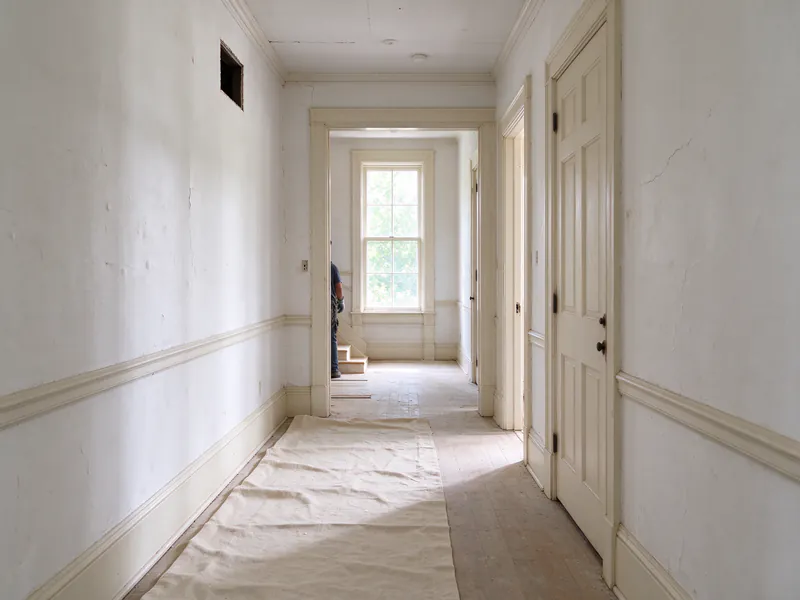
- Routes from above and below. Where an attic or the floor above gives access, we keep clear of ornamental ceilings.
- Openings where they patch cleanly. Behind baseboards, inside closets, at fire blocks, never through ornament.
- Trim taken off and reset. Where trim hides a route, we remove it rather than cut it.
- Original fixtures. We disconnect, protect and reconnect them, or have them rewired internally first.
Plaster-wall rewiring explains how we plan routes and leave patch-ready openings.
What stays the same in a district?
Everything electrical. Historic status adds review for exterior changes; it doesn’t relax or replace any electrical rule, and it doesn’t change what your insurer asks.
| Question | In a historic district | Outside one |
|---|---|---|
| Electrical permit | IBI permit, rough-in and final | The same |
| Code for new circuits | 2023 NEC as Ohio adopted it, since April 15, 2024 | The same |
| Who may do the work | OCILB-licensed contractor with City registration | The same within the City |
| Insurance | Each carrier’s own underwriting | The same |
| Outside service equipment | Can need a COA | No historic review |
Outside the City of Cincinnati, each municipality sets its own historic rules, and Kentucky cities run their own; we confirm them for each address. Our hiring guide covers licensing and registration checks.
How do we plan a job in a district?
So that historic review never holds up the inside work. We rewire interior circuits under the IBI permit while you prepare any exterior application and the City reviews it.
- We trace and map every circuit, and note any exterior work the plan calls for.
- We check your address on the City’s district map and landmark list.
- If the plan needs exterior work, apply for the COA early, with drawings or photos of the proposed equipment.
- We rewire the interior circuits under the permit, and IBI inspects the rough-in.
- Once approved, the exterior service work goes in, then the switchover and the final.
To plan a rewire in a district, call (513) 496-2715. Our guide to how replacement works covers the interior sequence in more detail.