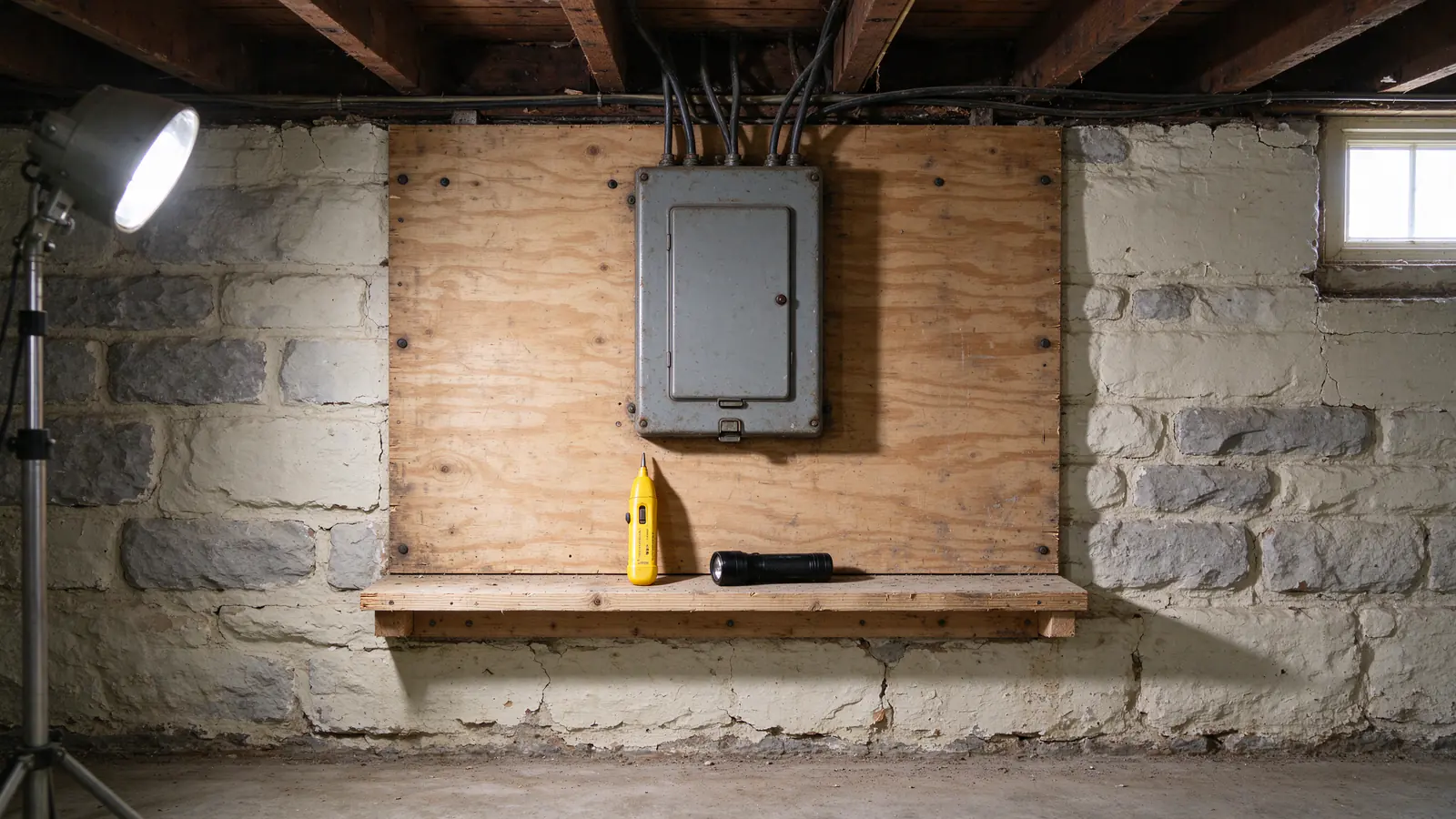
Your report says “knob and tube observed”. Now what?
You need to know how much of it is still live. At Conflux Cincinnati Knob and Tube we do knob and tube inspection in Cincinnati and Northern Kentucky: we trace each circuit, test what is live and write up what we find, circuit by circuit.
It is a safety assessment of one wiring system, not a home inspection or an engineering report. A home inspector’s job is to notice the wiring while walking the whole house. We start where that sentence stops: how many circuits, which are live, what condition they are in, and what the scope should be.
What do we do on the visit?
We trace every K&T circuit in the house to its fuse or breaker, whether or not you plan to replace it. A partial picture leads to partial answers, and you want a map anyone can price from.
- At the panel or fuse box, we match each fuse or breaker to what it feeds and check its size against the wire.
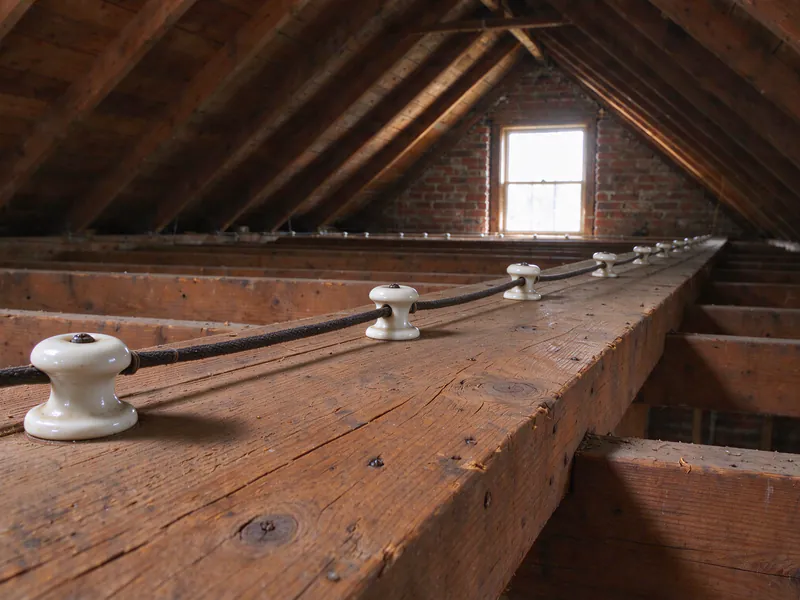
- In the attic and basement, we follow and photograph accessible runs, noting splices, insulation contact and damage.
- At the devices, we check receptacles, switches and fixtures for heat marks, and test three-prong outlets for a ground that is really there.
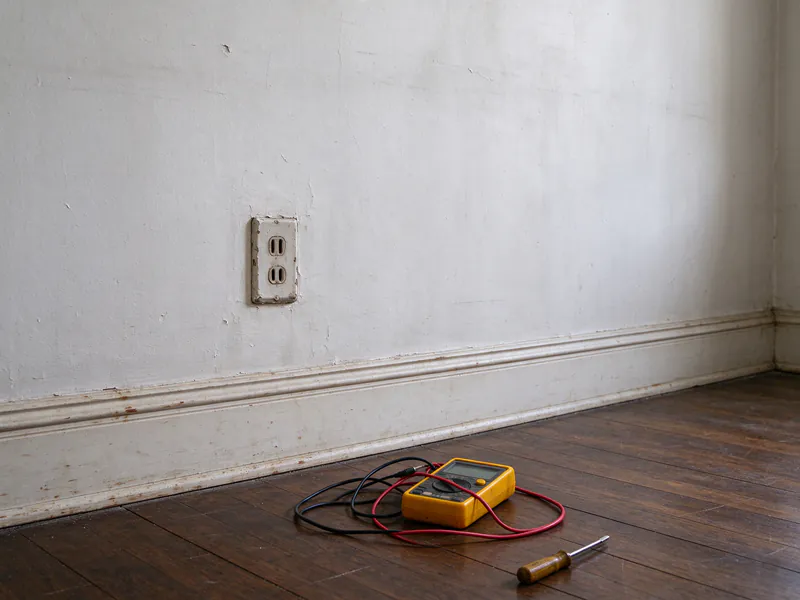
- At both ends of each run, we test to confirm live or dead.
- In each room, we count likely openings for every circuit a later job would replace.
How do we know which wires are live?
We tie every wire to a source. A circuit tracer or a controlled shutoff tells us which breaker or fuse feeds each run, and we match each device to its circuit number.
We count a run as abandoned only after it tests dead at both ends. A visual check alone fails both ways: a run can look disused and still feed a ceiling light, or carry porcelain knobs that have been dead for decades. The guide on active versus abandoned K&T explains why that difference matters to an insurer.
What about old wiring hidden behind newer outlets?
Mixed circuits are the hardest to find and the most important. Where a remodel tied newer cable onto a K&T run, the outlet at the far end looks modern while the source is original. Only a trace from the panel shows the change, and the guide to K&T spliced into newer cable explains the risk.
Is your wiring in bad shape?
Condition decides how urgent the work is. Intact K&T on a lightly loaded lighting circuit is a different finding from the same wire buried in insulation behind an oversized fuse.
| Finding | Why it matters |
|---|---|
| A fuse or breaker larger than the wire | The wire can overheat before the protection opens |
| Brittle or cracked insulation at fixtures | Heat at ceiling boxes ages the rubber fastest |
| K&T under attic insulation | Open conductors need free air to shed heat |
| Taped splices to newer cable | Joints the original system never planned, often hidden |
| A conductor resting on wood, its knob or tube missing | The original spacing and support are gone |
| Rodent damage or nails through runs | Insulation broken where the run is out of sight |
| A three-prong outlet on a two-wire circuit | A slot that looks grounded but is not |
The guide to K&T warning signs covers what an occupant can notice without touching anything.
Do we have to open your walls?
No, and we can learn a good deal without it, though not everything. Tracing and testing show which circuits are K&T and which are live from the panel and the devices. A borescope through an existing box can show the inside of some bays.
What stays hidden is the condition of wire inside closed walls and any splice buried in a ceiling. Our report sorts each finding into three groups:
- Verified: seen directly or tested at both ends.
- Inferred: consistent with the testing, but not seen.
- Needs access: would need an opening to confirm.
That honesty is what lets a buyer, an insurer or a second contractor rely on the report without over-reading it.
What will the report tell you?
You get a written circuit list. Each line names the circuit number, the rooms it feeds, the wiring type, live or dead, condition notes and a recommendation: replace now, replace later or already dead. Photos are tied to circuit numbers.
| Circuit | Feeds | Wiring | Status | Recommendation |
|---|---|---|---|---|
| 3 | Kitchen counter, two receptacles | K&T, spliced to newer cable at one box | Live | Replace now |
| 7 | Second-floor ceiling lights | K&T, brittle at two fixtures | Live | Replace now |
| 9 | Attic run to a former fan | K&T | Dead at both ends | Record; take out the exposed run |
The table above shows the layout only; it is not taken from a real house. If replacement follows, the same list becomes the job’s starting map.
Repair it or replace it?
We recommend a scope, and the findings decide which one fits. A targeted repair is plausible when damage is local and the rest of the circuit is sound.
It stops being plausible when the circuit is overfused, buried in insulation or spliced along its length.
Partial or whole house
When K&T is confined to part of the house, partial replacement can take the worst circuits first. When it runs through most rooms, a whole-house rewire is usually simpler. The guide on repair versus replacement sets out the logic in more depth.
When should you book, and what does it cost?
Book early if you have a deadline. A written report is often the first thing an insurer, a lender or the other side of a sale asks to see.
- Before a sale closes, the report gives both sides the same facts inside the contract’s inspection period.
- Before an insurer’s date, it shows which circuits the request actually covers.
- Before insulation, it gives the insulation crew a written answer about the attic.
The assessment is free: we trace the circuits and give you the written circuit list at no cost. You decide afterwards whether any work goes ahead.
IBI’s fee schedule separately lists a survey of a one- to three-family residence at $40 for the first unit and $20 for each additional unit. That is the inspection agency’s own service, not a contractor’s circuit trace.
Kentucky addresses
In Covington, Newport and the rest of Northern Kentucky, we read the findings against Kentucky’s adoption of the NEC rather than Ohio’s. The guide to identifying knob and tube helps before the visit, and buying or selling with K&T covers inspections during a sale. If the attic is the concern, see K&T and attic insulation.