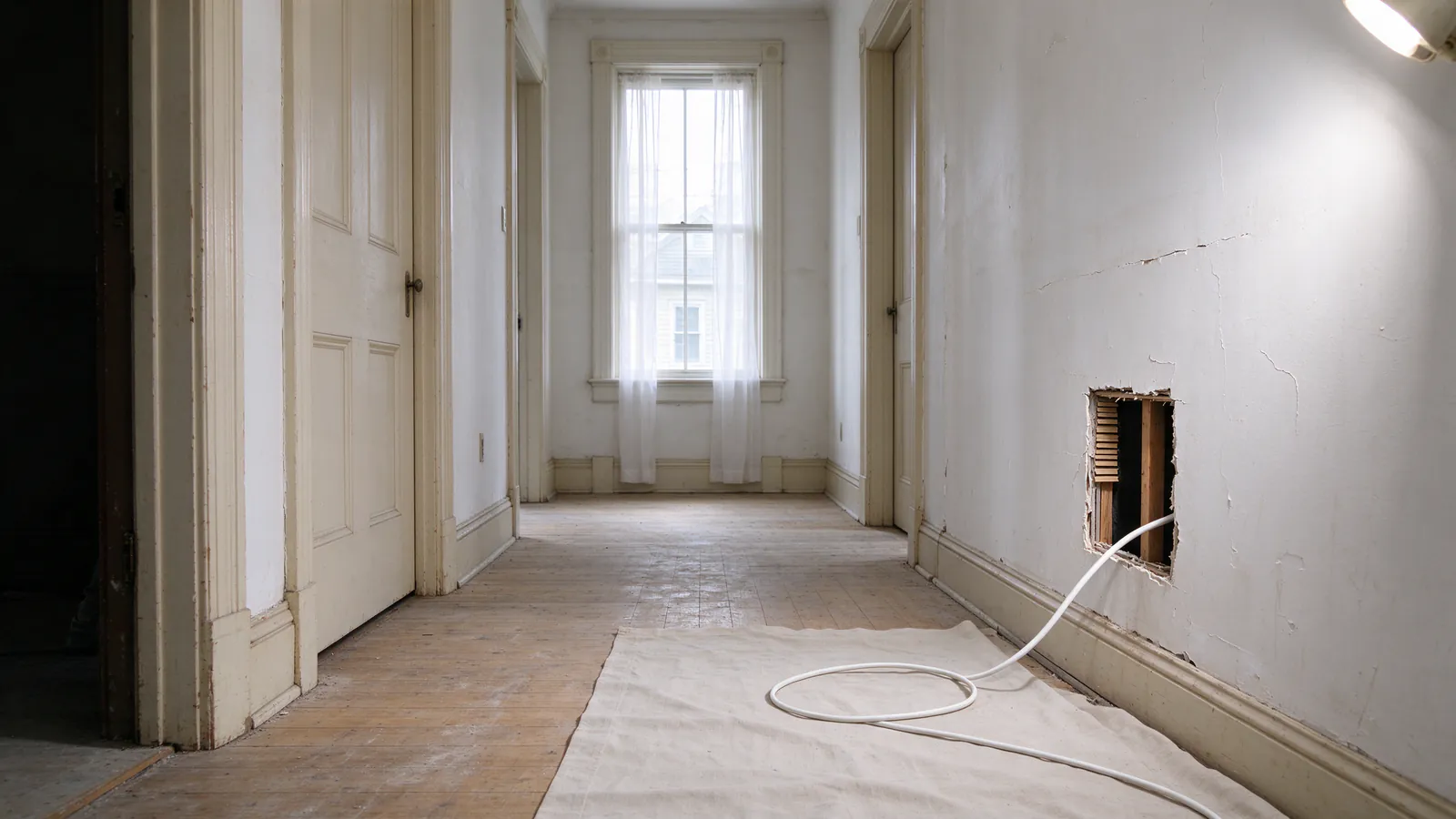
What do you need to do before the rewire starts?
Mostly, make decisions. How to prepare for a house rewire comes down to settling things early: furniture can move the day before, but what you want from the new wiring has to be settled before we write the scope.
At Conflux Cincinnati Knob and Tube we handle whole-house rewiring and K&T replacement across Cincinnati, Hamilton County and Northern Kentucky, and this list works for any rewire, ours or someone else’s.
What should you add while the walls are open?
Think about it now, because a rewire is the cheapest moment to change how your house is wired. The routes are open, we’re already working on the panel and an inspector is coming anyway. Adding the same things later means new openings.
| Room or need | What to consider adding |
|---|---|
| Kitchen | Dedicated circuits for appliances; outlets along every counter run |
| Bathrooms | A dedicated circuit; GFCI protection as the code requires |
| Bedrooms and living rooms | More outlets, so the extension cords go away |
| Home office | A dedicated circuit for computers and equipment |
| Heavy loads planned | A heat pump, electric range, dryer or EV charger, which affect panel and service size |
| Lighting | Ceiling lights where rooms have none; switches at both ends of a hall or stair |
| Outside | Outdoor receptacles and lights, noting historic-district rules where they apply |
Planned heavy loads change the panel decision, covered in K&T and 200-amp service. In a local historic district, additions on the outside of the house can need approval; see rewiring in a historic district.
What has to stay on while we work?
Tell us on the first visit. Most rewires happen with the family at home and power off one circuit at a time, and we build the sequence around what can’t go off.
- One circuit kept live for a freezer, a home office or a medical device.
- Heat in winter. We switch the furnace or boiler circuit over within the day.
- Other units. In a two- or three-family building, people in the other units keep power while we work on yours.
- Dates that matter. Holidays, guests, a new baby or a work deadline.
Our guide to how long a rewire takes explains the stages, including the one day the panel switchover cuts power to the whole house.
What paperwork should you dig out?
Anything that tells us about the house. A few documents and notes save time on the first visit and shape the scope, so collect what you have before we arrive:
- Home inspection reports that mention the wiring
- Insurer letters or questions about K&T, with any deadline
- Records of past electrical work, permits or panel changes
- Notes on symptoms: warm outlets, flicker, fuses that blow, and where
- Any test results for suspect materials, such as old attic insulation
If asbestos is a possibility, testing comes before any work disturbs the material; see our asbestos guide.
Where should you clear space first?
Above and below, because that’s where most of a rewire happens. The attic, the basement ceiling and the panel need clear access before day one.
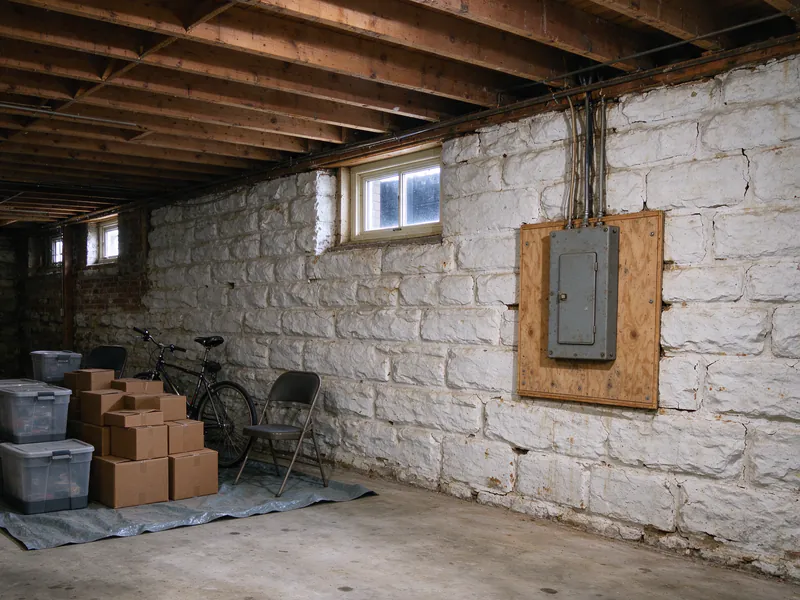
| Space | What to clear |
|---|---|
| Attic | A path from the hatch; stored things off the areas where wiring runs |
| Basement | Shelving and stored things away from the walls and the ceiling below each room |
| Panel | Three feet of open space in front of it, and a clear path to it |
| Closets | Empty the closets that sit above or below each other; we often use them as routes for new cable |
How do you get each room ready?
We work room by room, and each room needs the same basic preparation before its day. We plan the openings, but dust still travels.
- Pull furniture about three feet away from the walls we’ll work on
- Take down wall art, mirrors and shelves on those walls
- Box fragile things in rooms below the attic, where ceiling work can shake them
- Store rugs you care about; we put floor protection down, but rugs are safer put away
- Tell us about any fixtures you want saved and reinstalled, especially original ones
Plaster-wall rewiring explains how we place and protect openings in older finishes.
Who patches the holes?
Decide that in the contract, not when the walls are open. Nearly every rewire in an old house needs some openings, and who closes them, and to what finish, changes the price.
| Arrangement | What you get | What follows |
|---|---|---|
| Patching in the electrical scope | Openings filled and brought flush | Paint, usually by you or a painter |
| Patch-ready for a plasterer | Square, clean-edged openings, each listed by room | Your plasterer prices from the list and closes them |
| You patch | The same patch-ready openings and list | You close them on your own schedule |
Whichever you choose, get it in writing. Our guide to comparing rewiring quotes shows how patching changes the price.
What should you have at the end?
A circuit map, a labeled panel directory, a scope letter, a disconnection record with photos, the IBI permit final and the openings list. Keep them with your house records.
To start planning, call (513) 496-2715. Our guide to how replacement works follows the job from the first visit to the final inspection.