Did your inspector write “cloth wiring” or “ragwire”?
Then you need to know which circuits it means and how they’ve held up. At Conflux Cincinnati Knob and Tube we handle cloth wiring replacement in Cincinnati and Northern Kentucky: we trace the old circuits, check their condition and replace them with grounded cable.
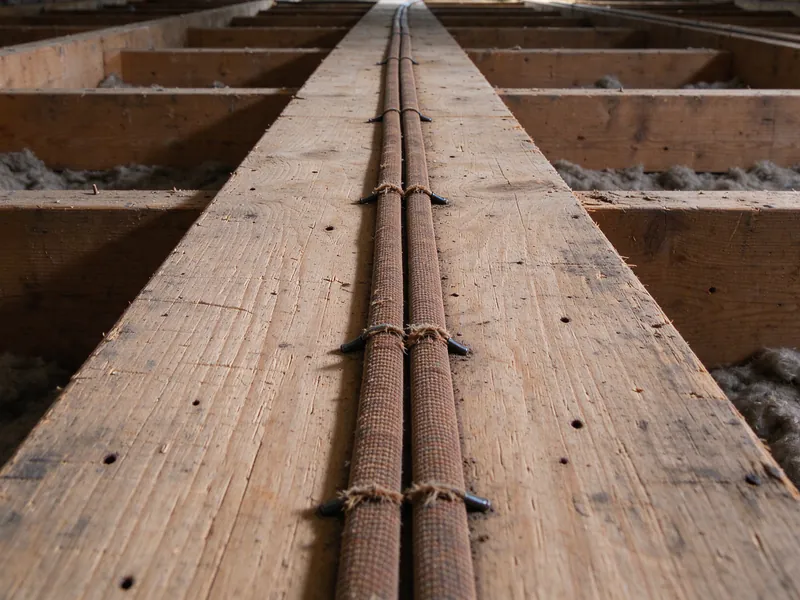
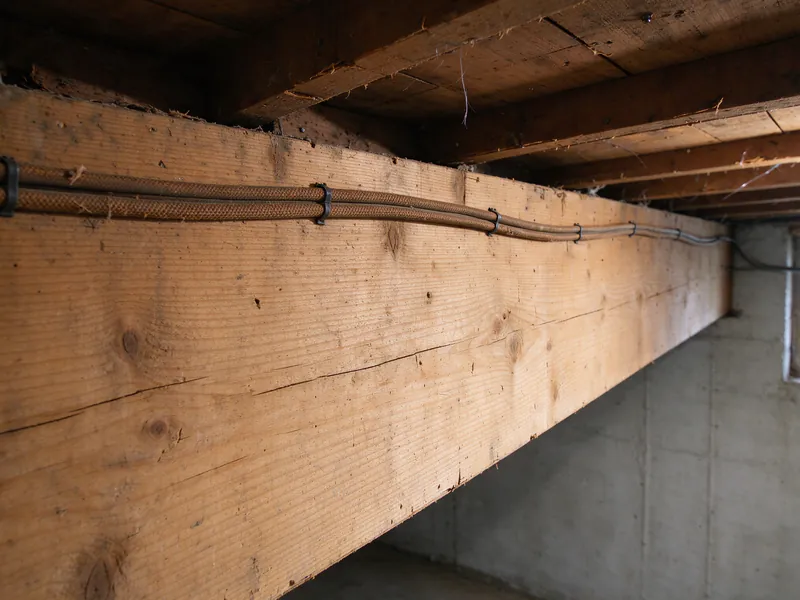
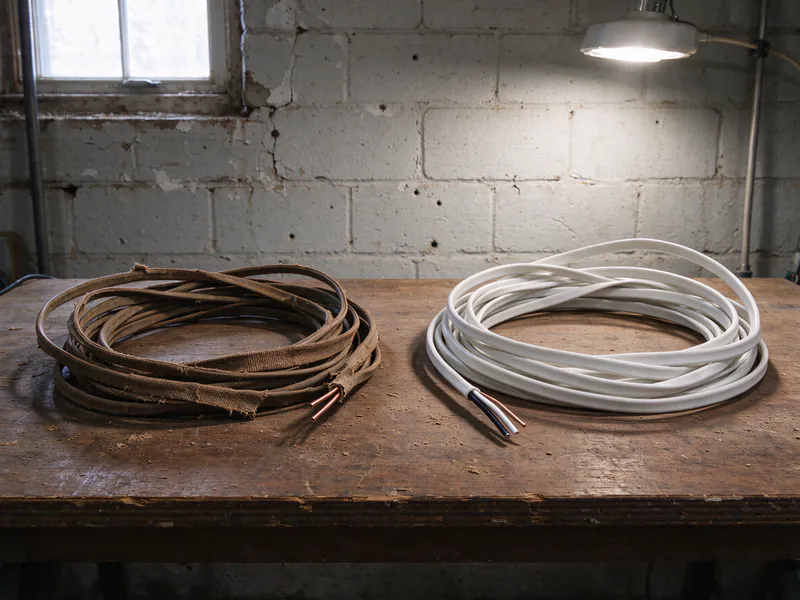
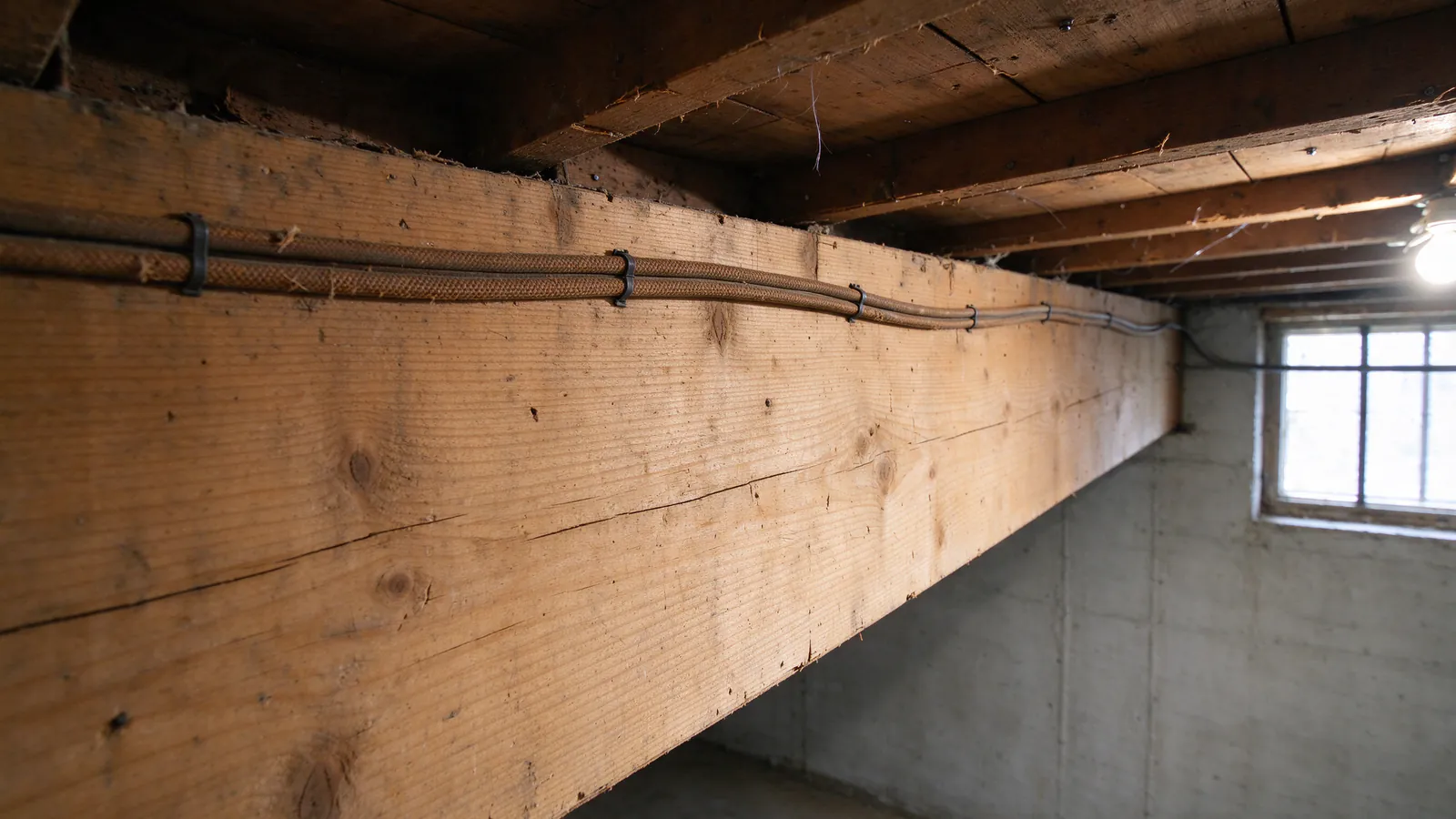
Cloth wiring usually means the cable that took over from knob and tube: two rubber-insulated conductors bundled in one woven cloth jacket. It turns up in houses built or remodeled from the late 1930s on, and very often in the same house as older K&T in the attic.
What exactly is cloth wiring?
The phrase covers more than one thing, and an inspection report rarely says which. What the cloth wraps, and whether a ground runs with it, is what matters.
| What you may see | What it is | Ground |
|---|---|---|
| Single cloth-covered wires on porcelain knobs | Knob and tube | None |
| A flat cloth-jacketed cable with two conductors | Early cloth-sheathed cable | None |
| Cloth-jacketed cable with a bare third wire | Later cloth-sheathed cable | Yes, if connected |
| Cloth-wrapped wires inside a spiral metal sheath | Early armored cable | Depends on the sheath and fittings |
In each case the cloth is a jacket. The real insulation is the rubber underneath, and the rubber is what ages.
Is your cloth wiring wearing out?
It depends on the rubber under the cloth, which hardens with heat and time, then cracks when it is bent. A run in a cool basement can still be flexible.
The same cable at a ceiling fixture, cooked by decades of incandescent bulbs, can crumble when the fixture is taken down.
Why do some circuits age faster?
That is why condition varies more than age suggests. Attics, ceiling boxes and anything near a heat source tend to be worst. The danger is not the cloth fraying; it is bare conductor where the rubber has fallen away inside a box.
Is cloth cable grounded?
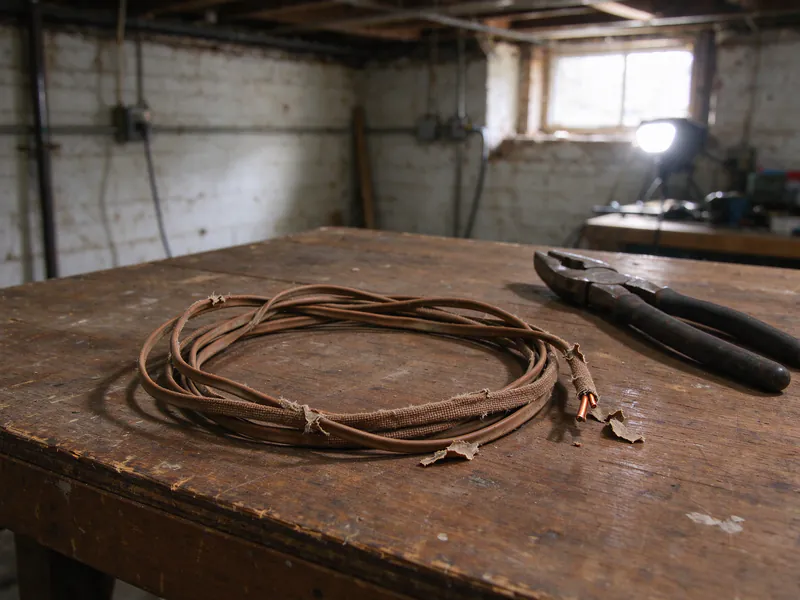
Usually not. Early cloth-sheathed cable carried two conductors and no ground, the same as K&T. Outlets on it have no equipment ground, and three-prong receptacles on it are only cosmetic unless a real ground was added. Knob and tube grounding explains the options, which apply to cloth cable the same way.
What does your inspector or insurer mean?
Wording varies. Inspection reports say “cloth wiring”, “ragwire”, “old two-wire” or “original wiring”, and some use those terms for K&T as well. An insurer reading the report may not know which one the inspector saw.
We fix that with precision. Our circuit list names each circuit’s wiring type: K&T, cloth-sheathed cable, armored cable or modern cable. That turns a vague line on a report into something an underwriter or a buyer can act on. If the request names K&T specifically, see replacement for insurance.
What do we check on the first visit?
We trace every circuit to its fuse or breaker, cloth cable and K&T alike, and check fuse sizes against the wire. We follow the attic and basement runs and confirm each run live or dead at both ends.
- At ceiling boxes and switches, we check the rubber where heat has worked on it longest.
- At receptacles, we test three-prong outlets for a real ground.
- Along each run, we locate splices between cloth cable, K&T and newer cable.
- In each room, we count likely openings for any circuit we would replace.
You get a written circuit list marked replace now, replace later or already dead, with the wiring type named on every line. A full knob and tube inspection covers the same ground.
Cloth, K&T and newer cable all in one house?
Many houses carry all three. A 1920s house remodeled in the 1950s can have K&T in the attic, cloth cable in the kitchen and modern cable from a later bath, sometimes on the same circuit.
Splices between them are the weak points, because each joint ties an ungrounded section to whatever follows it. The guide to K&T spliced into newer cable explains why we replace these rather than patch them. Where every wiring type needs to go, a whole-house rewire handles them in one project.
Does it all have to go at once?
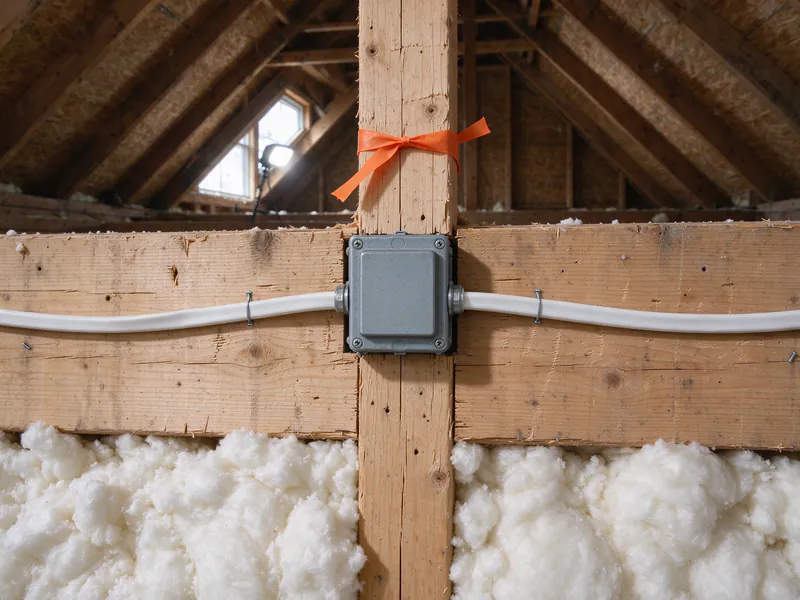
No. We replace cloth wiring the same way as K&T: whole circuits, panel to last device, never spliced back into old cable. Routes come from the attic and basement, with small openings where framing blocks the way; plaster-wall rewiring covers the method.
Because condition varies by circuit, cloth wiring suits phasing. We do ceiling-light circuits with cracked insulation and kitchen circuits carrying heavy loads first; a sound run in a cool basement can wait. Partial replacement explains how the boundary is written down.
What should you do until then?
Most people live with cloth cable while we plan the work, and a few habits keep the risk down until the worst circuits are replaced.
- Hold off on fixture swaps. Taking down an old ceiling fixture is exactly when brittle rubber cracks; let us check the circuit first.
- Spread heavy loads. Space heaters and window air conditioners belong on the newest circuits available.
- Label, don’t fake, grounds. GFCI protection with “No Equipment Ground” labels is the code’s interim step for ungrounded outlets.
- Report heat. A warm switch plate or a scorched outlet moves that circuit to the front of the list.
Do we handle aluminum wiring?
No. Aluminum branch wiring from the 1960s and 1970s is a different problem with its own repair methods, and we don’t take it on. If we find aluminum circuits, we note them on the circuit list, so you know they are there.
What does cloth wiring replacement cost?
Conflux typically charges $750 to $2,500 per circuit to replace cloth wiring, or $12,000 to $35,000 and up when we rewire an older home whole. The written estimate we build from your circuit list after the first visit sets the final price.
Where wiring is altered, IBI’s added-wiring permit for an existing single-family home is $120, including processing. The Cincinnati cost guide breaks down the rest, and the guide on whether old wiring is dangerous explains which conditions move a circuit up the list.