Is the old wire itself asbestos?
Generally not. Does knob and tube have asbestos? A standard K&T wire is copper insulated with rubber and wrapped in a cotton braid, and the knobs and tubes are glazed porcelain.
At Conflux Cincinnati Knob and Tube we assess and replace knob and tube across Cincinnati, Hamilton County and Northern Kentucky. Asbestos testing and abatement are separate trades from electrical work; here we explain where the question comes up and how we plan around it.
| Part of the system | What it’s generally made of | Asbestos concern |
|---|---|---|
| Wire | Copper | None |
| Insulation | Rubber under a cotton braid | Not on standard K&T wire |
| Knobs and tubes | Glazed porcelain | None |
| Loom | Woven, flexible sleeve | Generally fabric; test if unusual |
| Splices | Solder and friction tape | None known |
That’s how K&T was typically made. Materials varied by maker and era, so anything unusual is worth testing rather than assuming.
What near your wiring might contain asbestos?
The question usually belongs to things near the wiring. Several materials in older houses can contain asbestos, and any work on K&T is likely to come up against them.
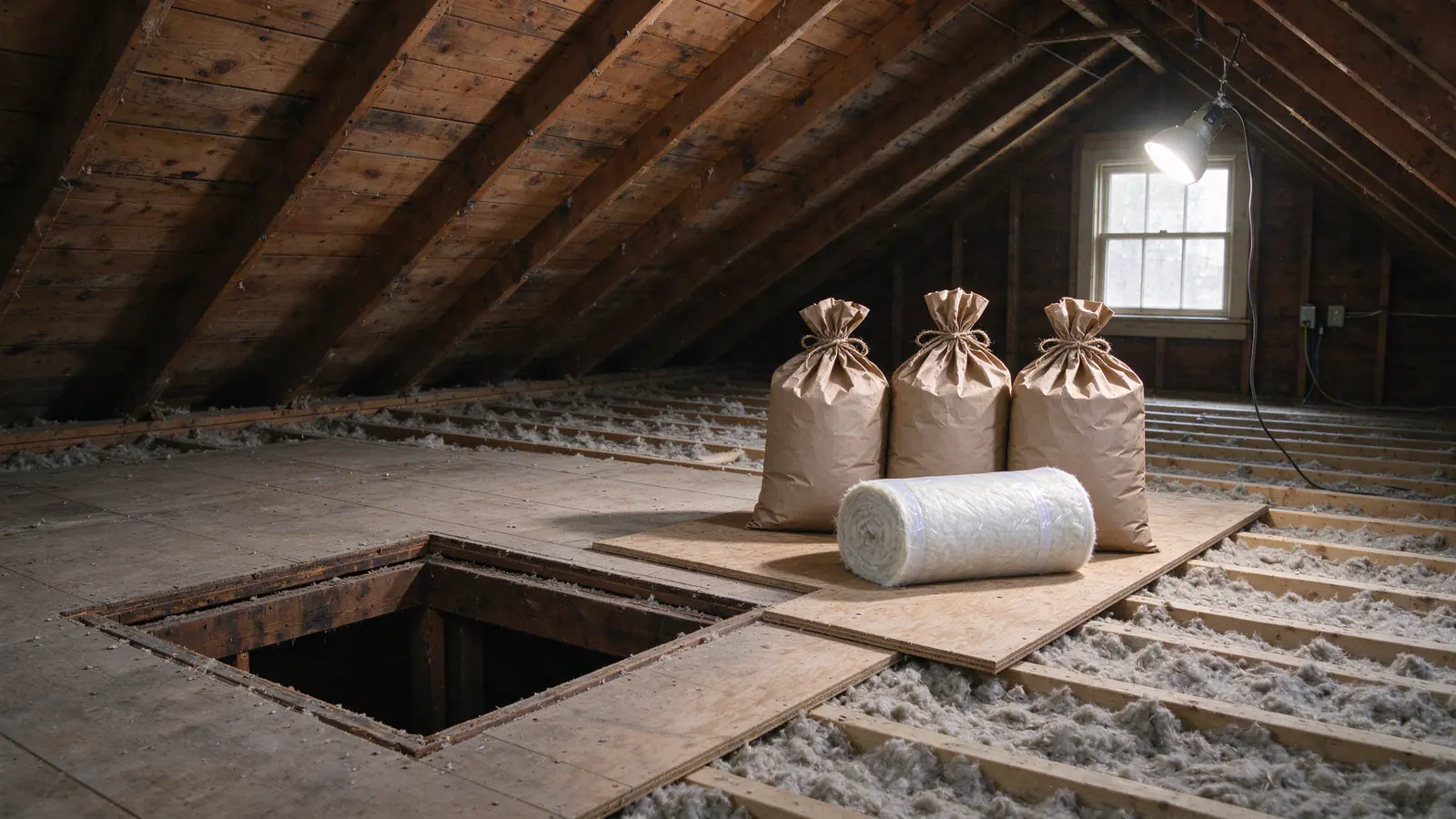
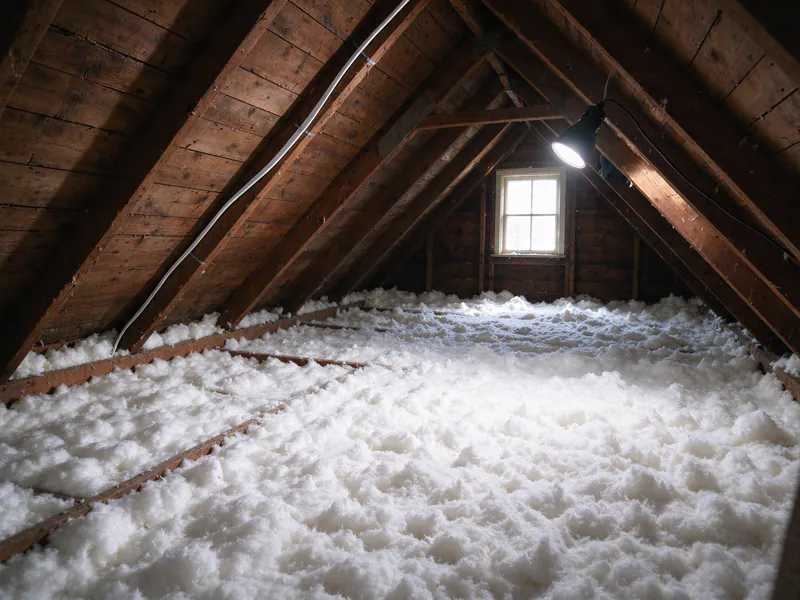
- Attic insulation. Some loose-fill insulation in older attics, notably vermiculite, a grey-brown pebbly material, can contain asbestos. It often covers attic K&T runs.
- Heat-resistant fixture wire. Some wire made for light fixtures and heating equipment used asbestos-containing insulation, unlike ordinary branch wiring.
- Panels and fuse boxes. Some older panels and fuse boxes used heat-resistant backing or arc barriers that can contain asbestos.
- Plaster coatings and ceilings. Some textured coatings, joint compounds and ceiling finishes from certain eras can contain it.
- Pipe and duct wrap. Insulation on basement heating pipes and ducts sits close to basement runs.
Why can’t you tell by looking?
Because asbestos doesn’t show itself. A material that looks like a common suspect may contain none, and one that looks harmless may contain some. Only a laboratory analysis of a sample confirms it.
Taking a sample disturbs the material, so a qualified asbestos professional does it, not you and not the electrician. Please don’t scrape, sweep, vacuum or move suspect material to look at the wiring under it.
How do we plan a rewire around it?
Electrical work disturbs exactly the spaces where these materials sit: attics, ceilings, walls and the panel. So a suspect material changes the order of work, not just the precautions.
- We note suspect materials on the assessment wherever wiring runs through or under them, without disturbing them.
- Testing comes first. A qualified professional samples the materials the work would disturb.
- We adapt the plan. If a material tests positive, the right trade handles it before we work there, or we choose routes that avoid it.
- The rewire carries on in cleared areas, with the rest of the job sequenced around them.
Attic runs under suspect insulation are the most common case. Our attic insulation page covers how we deal with attic K&T once the space is safe to work in, and plaster-wall rewiring covers openings in walls and ceilings.
What should you ask before work starts?
A few early questions keep a suspect material from stalling the job halfway through. Put them to whoever assesses the wiring and to the testing professional:
- Which materials would the planned routes disturb, room by room?
- Can the routes skip a suspect ceiling or wall entirely, using the attic, basement or closets instead?
- Does the panel or fuse box have parts worth testing before it comes out?
- If the attic insulation tests positive, what has to happen before anyone works on attic runs?
- Who keeps the test results, and will you need them for a sale or an insurer?
The answers shape the rewiring plan, and in a house with ornate ceilings they matter for historic finishes too.
How does it change the schedule?
Testing and any abatement add steps before the electrical work in the affected spaces. The lab and the abatement trade set how long those take, not the electrical schedule.
Build them into the overall timeline, which our guide to how long a rewire takes explains. If you’re selling, ask whether you need to share the test results, and see our disclosure guide.
What should you tell us when you book?
Any material you suspect, and any past test results you have. Our guide to preparing for a rewire lists what else to gather, and identifying K&T covers what you can safely look at yourself.
To talk through a house where asbestos may be part of the picture, call (513) 496-2715.