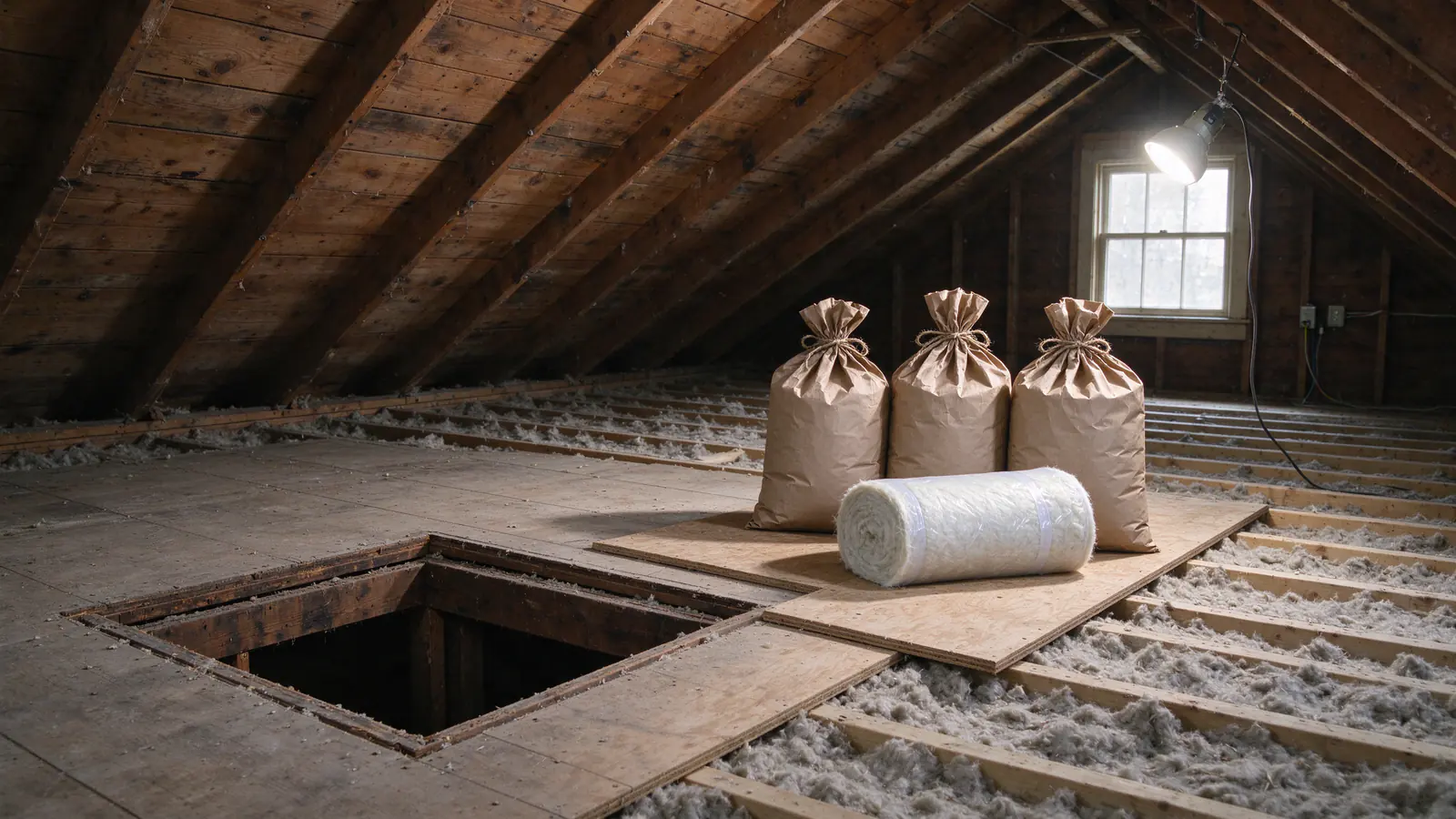
Booking attic insulation before the cold sets in, and worried about the old wiring up there? At Conflux Cincinnati Knob and Tube we clear knob and tube out of attics across Cincinnati, Hamilton County and Northern Kentucky so your insulation can go in.
This seasonal note covers insulating an attic with knob and tube before winter: why the order matters, how to schedule it, and what to ask before the insulation installer arrives.
Why does the attic question come up every fall?
Because that’s when people book insulation. For many owners, the booking is the first time anyone looks hard at the porcelain knobs and tubes on the attic joists, and an installer may refuse to start until someone deals with them.
Our winters explain the rush. NOAA’s 1991-2020 normals for the Cincinnati airport in Hebron, Kentucky put the January average at 31.4°F, the average January low at 23.1°F, and about 100 days a year with a low at or below freezing. The year adds up to 4,892 heating degree days.
Why does the wiring have to go first?
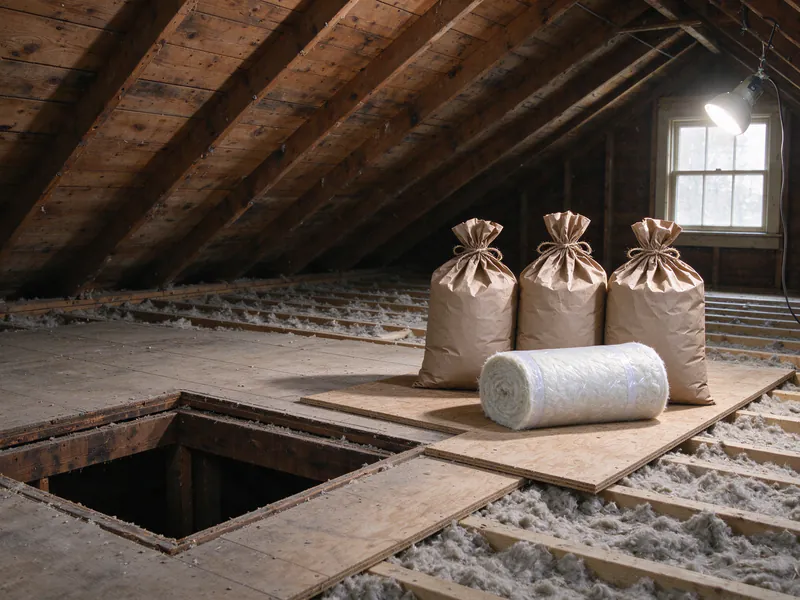
Because open knob and tube was built to shed heat into the air around it. Article 394 of the NEC, which Ohio adopts, bars concealed knob and tube in hollow spaces where loose, rolled or foamed-in-place insulation surrounds the wires.
There’s a practical reason too. We can trace a run, replace it or prove it dead quickly across bare joists, and only slowly through a deep layer of loose fill. Once the insulation is in, every later question about that wiring costs you more to answer. Our knob and tube wiring guide explains how the system was meant to work.
How do you schedule it?
Work backward from the day your insulation is booked. The electrical side needs its own visit, a permit, the attic work, an inspection while the attic is still open, and a written record for the installer.
| Step | When it happens | Why it comes here |
|---|---|---|
| Tracing visit | Before you fix the insulation date | Shows which attic runs are live, which are dead and which were already replaced |
| Written circuit list | After the visit | Marks each attic run replace now, replace later or dead |
| Permit | Before work starts | We arrange it with IBI in Cincinnati, or with the authority where your house is |
| Attic work | After the permit | We replace or reroute live runs out of the insulation zone and disconnect dead runs at both ends |
| Rough-in inspection | With the attic still open | An inspector can’t pass wiring buried in fill |
| Attic record | Before insulation day | Photos, the run list and where each junction box sits |
| Insulation | Last | Your installer works from the record, not from guesses |
Our Cincinnati electrical permit guide covers who opens the permit and what IBI checks. How long each stage takes depends on how many attic circuits are live; the guide to rewiring timelines covers what stretches a schedule.
How do you stay warm while circuits are off?
We plan around it. Winter work happens in a lived-in, heated house: we shut circuits off one at a time, keep heating circuits on in cold weather, and keep one working circuit for a freezer, a home office or a medical device.
- The furnace. A gas furnace still needs power for its blower and controls. If its circuit is knob and tube, we agree with you in advance when to switch it over.
- Space heaters. If you’re leaning on space heaters, you may already be overloading old circuits. Tell us on the first visit, so the plan accounts for it.
- Multi-unit buildings. We sequence the work so other residents keep power. Partial replacement explains how we split a job into stages.
What if your attic already has some insulation?
Then the first step is the same as in an empty attic: find out what’s live before anyone moves or adds anything. Some attics already hold old batts or loose fill over wiring nobody has checked.
- Don’t add more on top yet. A second layer makes the wiring underneath harder to trace and replace.
- Loose fill gets a second look. If it might be vermiculite, have it tested before anyone disturbs it; our knob and tube asbestos guide explains why.
- Dead runs can stay put. Once we prove a run dead at both ends, we disconnect and record it without stripping the attic. Our guide to active and abandoned K&T explains the proof, and knob and tube removal covers the record.
What should you ask your installer or program?
Ask what they need before you book. Ohio’s Home Weatherization Assistance Program and Duke Energy Ohio don’t set a knob and tube rule for attics, so the installer’s own policy and the code decide.
- Do you need the knob and tube removed, disconnected, or confirmed dead in writing?
- Which document do you accept: an electrician’s letter, the photo record or the permit final?
- Will you leave junction boxes uncovered and marked once the fill is in?
- If wall cavities are part of the job, who checks the wiring inside them first?
Write the answers down. They become the scope of the attic work, and our knob and tube attic insulation page shows how we carry it out.
Why start before the weather does?
Because the sooner we trace the attic, the more say you keep over the insulation date. The IBI permit for added wiring in a single-family house is $120, including the $60 processing fee, so the calendar matters more than the fee.
If you aren’t sure how pressing your situation is, the knob and tube assessment sorts it in nine questions. To book the attic tracing, call (513) 496-2715 or send the form below.