Old wiring in a house or flat in East Walnut Hills?
A ceiling repair showed cloth wire on porcelain, or you own a building of stacked flats and the insurer wants answers. At Conflux Cincinnati Knob and Tube we handle knob and tube replacement in East Walnut Hills and Walnut Hills, under an IBI electrical permit.
The two neighborhoods share most of a name, but not a building mix. Walnut Hills has more two-families; East Walnut Hills has more small apartment buildings and its own local historic district. Either way, we start by tracing what is live.
How old is the housing here?
About half of it dates from 1939 or earlier in both neighborhoods, well above the city’s 40.3%.
| Housing units | East Walnut Hills | Walnut Hills | Cincinnati |
|---|---|---|---|
| Built 1939 or earlier | 50.9% | 48.1% | 40.3% |
| Built before 1950 | 54.0% | 53.2% | 48.6% |
| Detached houses | 21.2% | 11.3% | 38.4% |
| Two-unit buildings | 6.0% | 12.1% | 8.5% |
| Three- and four-unit buildings | 12.6% | 8.9% | 12.1% |
Census Bureau ACS estimates, 2019-2023, combined from three tracts for East Walnut Hills and four for Walnut Hills. In raw numbers, 1,633 of 3,210 units in East Walnut Hills date from 1939 or earlier, and 2,161 of 4,495 in Walnut Hills.
Do you need historic district approval?
Not for the inside. Interior rewiring in the East Walnut Hills local historic district needs no Certificate of Appropriateness while the outside stays unchanged. The Historic Conservation Office reviews exterior work; the Woodburn Avenue district is a separate business district.
What brings a rewire into review is equipment on the outside of a house. A meter base moved to a new wall, a service mast added for a larger service, or conduit run up a visible face can each need a certificate inside the district line.
Will the historic review hold up the electrical permit?
No, not when the work stays inside. If a building permit is part of the job, the City passes it to the Historic Conservation Office without you asking. The electrical permit is a separate application to IBI, and it does not wait on that referral.
Live in a building of stacked flats?
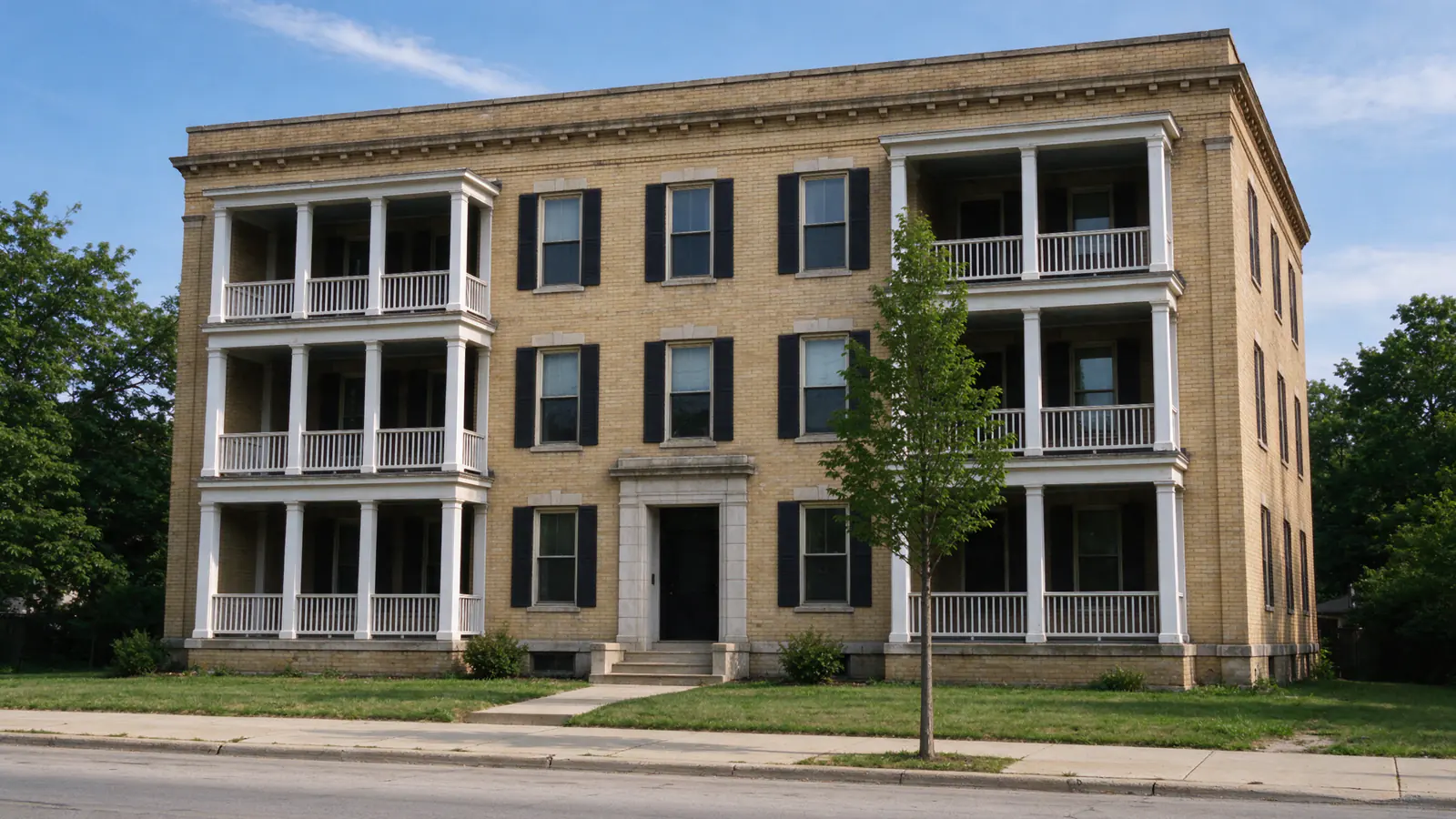
Then your wiring probably passes through your neighbors’ walls. Only 21.2% of East Walnut Hills housing units are detached houses. Roughly four in five sit in attached houses, two-families, small flats or larger apartment buildings, and that changes where new cable can go.
In a building of stacked flats, a run that feeds a top-floor kitchen may pass through the walls of the flats below it. So we trace across the whole building, not just inside the flat we are rewiring, and no one loses a circuit they did not know depended on another unit.
Does a four-unit building follow different rules?
Yes. Once a building reaches four units, the Ohio Building Code governs instead of the Residential Code of Ohio, though both reference the 2023 NEC. We arrange the permit for the right building type.
We then plan the work flat by flat. Tracing needs short visits to flats we are not rewiring, so we arrange those with the people living there before the first day. Multi-unit rewiring covers sequencing with people at home, and whole-house rewiring covers a building done in one pass.
Own a two-family in Walnut Hills?
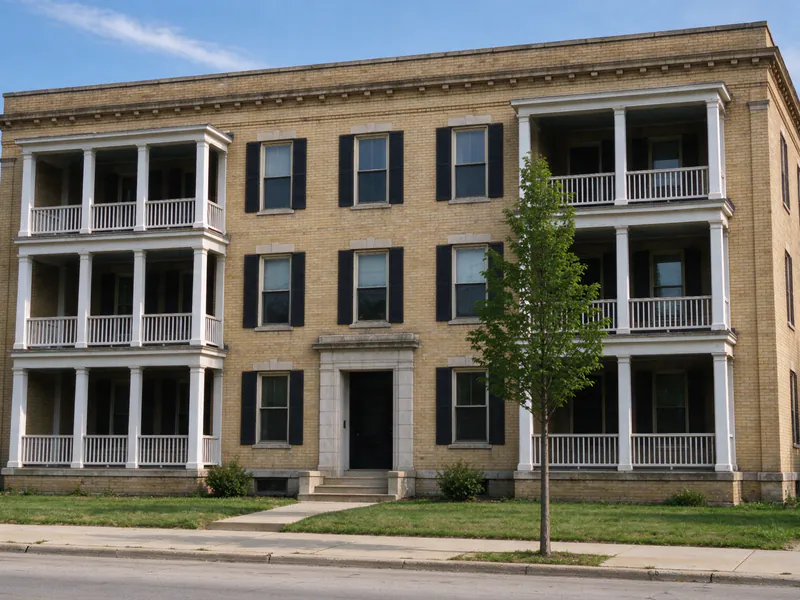
Then you likely have two households and two panels under one roof. Walnut Hills has 12.1% of its units in two-unit buildings and only 11.3% in detached houses.
The difference shows up in planning more than in method. With both units usually occupied, we keep each household’s power to whatever cannot wait, such as a freezer, a work-from-home desk or a medical device, while its rooms are down, and heating stays in service in cold months.
- Shared loads first. We trace lighting on the stairs, in the basement or at the porch to whichever panel feeds it, and move it if it crosses between units.
- One unit, then the other. We can follow each unit’s own schedule, including a vacancy, without leaving the other dark.
- Separate paperwork. Each unit ends with its own circuit map and panel directory.
The age profile is close to its neighbor’s: 48.1% of Walnut Hills units date from 1939 or earlier and 53.2% from before 1950. Where an owner can only take on one unit for now, partial replacement explains how the finished and unfinished parts are recorded, so a buyer or insurer can tell them apart later.
When can the plaster be patched?
After IBI has seen the new wiring. In its own words, it is unable to approve installations it cannot inspect, so in plastered rooms that order decides when patching can begin.
We set up that sequence on the first visit:
- Every K&T circuit traced to its fuse or breaker, with fuse sizes compared with the conductor each one protects.
- Attic and basement runs followed to where they end, including any that leave the unit we are rewiring.
- Live or dead confirmed at both ends of each run, rather than assumed from a tester at one outlet.
- Openings counted per room, and a written circuit list marked replace now, replace later or already dead.
That count becomes the patching list after inspection. Plaster-wall rewiring explains how we keep openings small, K&T removal covers what happens to the old runs once they are dead, and the walkthrough of how replacement works lays out the whole job.
What will it cost?
Conflux’s typical range is $12,000 to $35,000 and up for a whole house and $2,000 to $10,000 for a partial job. The IBI permit adds a small fee that rises with the number of families in the building.
| Building in East Walnut Hills or Walnut Hills | Permit total with processing |
|---|---|
| Detached or attached single-family house | $120 |
| Two-family | $125 |
| Three-family | $130 |
| Apartments, four units or more | $130 for the first three units, plus $25 for each further unit |
Every house meter adds $25, and a reinspection trip is $40. The figures come from IBI’s published schedule, effective January 1, 2025.
Labor, materials and patching are the larger part of your price, and they depend on what we find when we trace the circuits. A K&T inspection is the usual starting point, and the primer on knob and tube explains what is being traced.