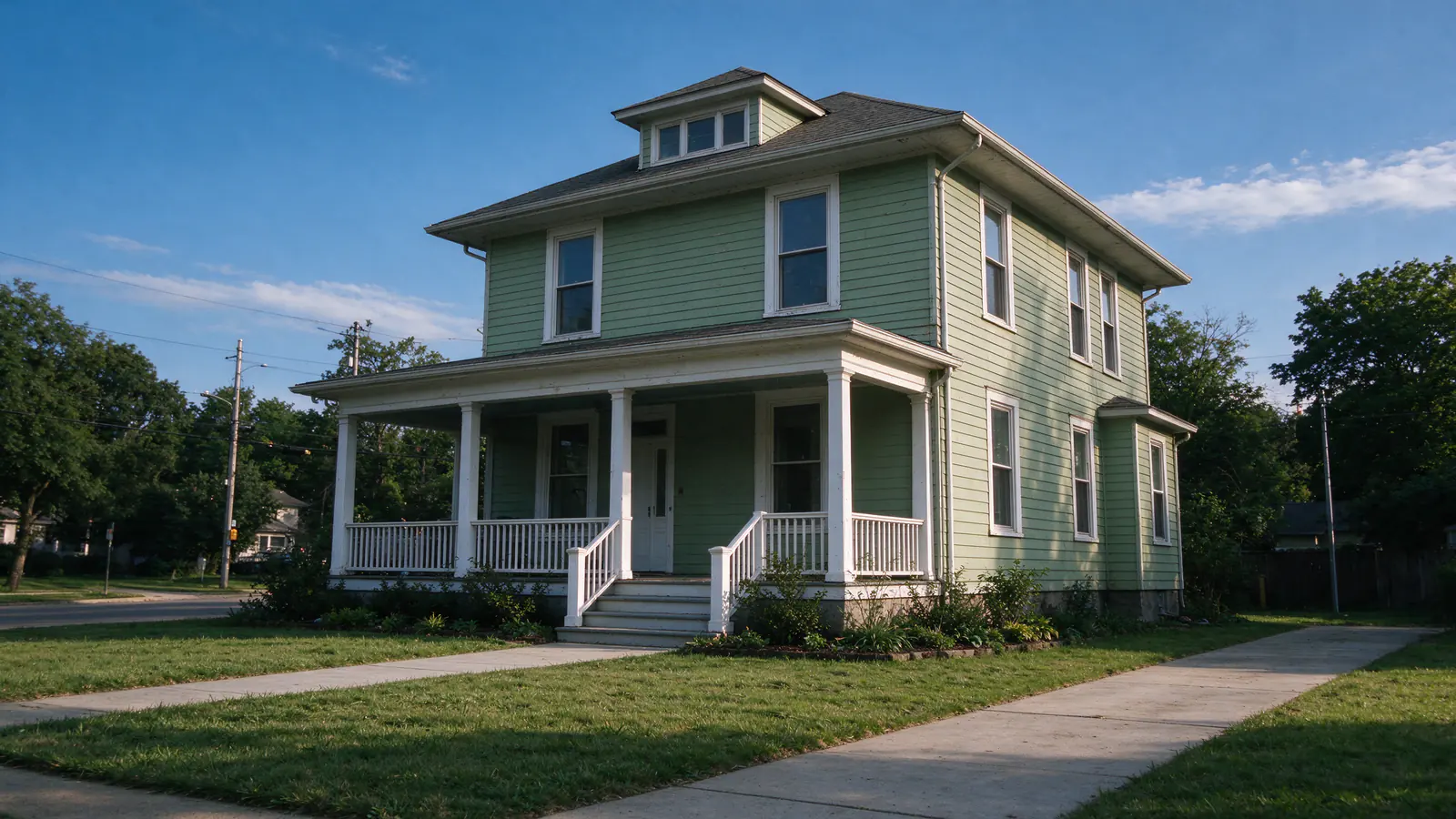
Knob and tube turned up in your Hyde Park house?
Selling, insulating the attic or adding a car charger? At Conflux Cincinnati Knob and Tube we handle knob and tube replacement in Hyde Park, Cincinnati, and in Mount Lookout and Oakley next door, tracing what is live and replacing it under an IBI permit.
Most houses here are detached, with one panel and an attic and basement that both carry wiring. That is usually where we find the old runs, and where we start.
Do you need historic district approval?
Almost certainly not. Only one local historic district lies in Hyde Park, the 18.8-acre Hyde Park Observatory district, and none covers Hyde Park Square, Mount Lookout or Oakley.
Where is the old wiring likely to be?
Usually above the top-floor ceilings and under the first floor. Nearly half of Hyde Park’s housing units, 49.0%, are detached houses, against 38.4% citywide.
| Housing units | Hyde Park | Mount Lookout | Oakley | Cincinnati |
|---|---|---|---|---|
| Built 1939 or earlier | 51.8% | 51.1% | 40.8% | 40.3% |
| Built before 1950 | 59.9% | 57.6% | 48.7% | 48.6% |
| Detached houses | 49.0% | 76.1% | 39.0% | 38.4% |
| Two-unit buildings | 8.6% | 4.0% | 9.0% | 8.5% |
U.S. Census Bureau ACS 5-year estimates, 2019-2023, combined from census tracts that approximate each neighborhood. For Hyde Park, 3,692 of 7,126 units date from 1939 or earlier.
Why didn’t the last remodel get it all?
In a detached house of that age, K&T often survives in the places a remodel never reached: the attic above the top-floor ceilings, and the basement joists under the first floor.
Where an attic is open and walkable, we can see and trace those runs end to end. Where it has been floored or finished as a room, the same runs sit under boards or behind knee walls, and we lift a few boards or make a small opening instead.
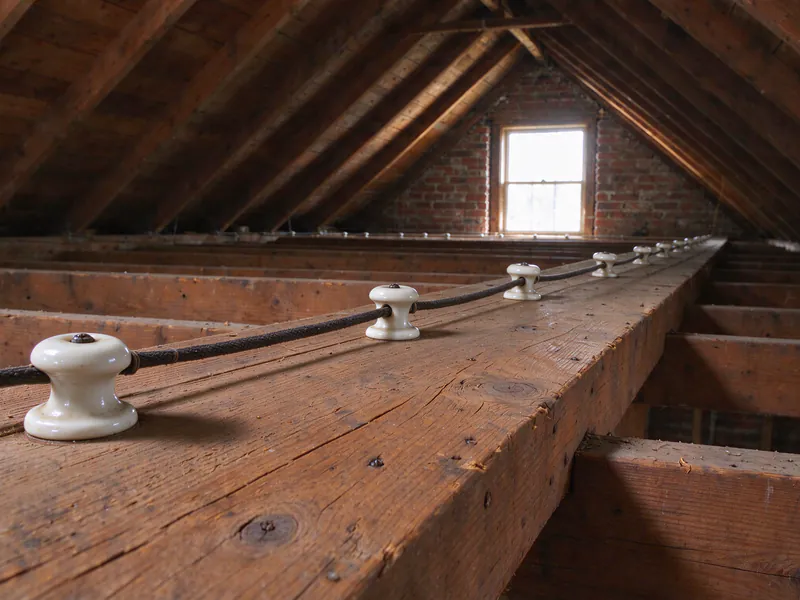
On the first visit we follow each one from its fuse or breaker, check the fuse size against the wire, and confirm whether it is live at both ends. A knob and tube inspection explains the visit, and the guide to identifying K&T shows what owners can safely look for.
Insulating the attic?
Then the K&T question comes first. We deal with live runs in an attic before insulation goes in, because loose or blown material should not envelop open conductors.
We disconnect dead runs at both ends, tag them and photograph them, so the insulation contractor and any later buyer can see what was retired. K&T and attic insulation covers the sequence, including junction boxes that would otherwise end up buried.
New outlets, but old ceiling lights?
It happens often. One kind of partial update leaves the outlets on newer cable and the ceiling lights and wall switches on the original two-wire circuits. From the rooms, the house looks finished; from the attic, it is not.
Those ceiling circuits feed through boxes that sit just under the attic floor, which makes them reachable from above in many detached houses. Where the attic is accessible, we drop new cable to each fixture box with little work from below, then cut back, cap and tag the old runs.
Are your three-prong outlets really grounded?
The outlets deserve a second look too. A three-prong receptacle on a two-wire circuit is not proof of a ground, and some were fitted with a jumper that only imitates one. K&T grounding explains the checks and the code-allowed fixes.
Selling or buying a Hyde Park house?
Get the wiring answered early. The Ohio Residential Property Disclosure Form asks sellers whether they know of problems or defects with the electrical system. In a sale, that question and the buyer’s inspection report often arrive together.
- For the buyer: our circuit-by-circuit assessment within the inspection period turns “K&T observed” into a written scope.
- For the seller: the same scope can support a credit or a repair before closing, with the IBI permit final to show it was inspected.
- For both: the disconnection record and panel directory travel with the house.
Knob and tube before closing covers timing during a sale, and the guide to disclosing knob and tube in Ohio covers the form itself.
Adding a car charger or a heat pump?
Then an old fuse box rarely has the room. A service upgrade then raises two questions the rewire alone does not.
- The outdoor disconnect. The 2023 NEC, adopted in Ohio for one- to three-family homes since April 15, 2024, includes an outdoor emergency disconnect provision for one- and two-family dwellings. We settle with IBI whether it applies to your service change when the permit is opened.
- The district. Inside the Observatory district, a disconnect or a new meter on a visible wall is exterior work and can need a Certificate of Appropriateness.
A new panel does not replace the branch wiring behind it, which is why fuse box replacement and the 200-amp service guide treat them as separate decisions.
Live in Mount Lookout or Oakley?
We work there the same way. Both neighborhoods follow Hyde Park’s permit route, with IBI permits and the City’s contractor registration, and neither has a local historic district to check. Their housing differs more than their rules do.
Mount Lookout
Mount Lookout is the most detached part of this area: 76.1% of its units are single houses, and 738 of 1,445 units, or 51.1%, date from 1939 or earlier. Most jobs there look like Hyde Park’s, centered on attics, basements and ceiling circuits.
Oakley
Oakley is younger. Its 40.8% pre-1940 share is close to the city’s, and only 39.0% of units are detached houses, so a mid-century house with breakers can still hide a few original circuits. There, a careful trace matters more than the neighborhood’s age.
What will it cost?
Conflux typically charges $12,000 to $35,000 and up for a whole house and $2,000 to $10,000 for a partial job. On top, IBI charges $120 to permit added wiring in an existing single-family house.
- Reinspection: $40 a trip.
- Work started without a permit: pays double.
Those figures come from IBI’s schedule, effective January 1, 2025. The larger part of your price is labor, materials and patching, set by how many circuits test live. The cost guide breaks those parts down, and whole-house rewiring covers taking every circuit at once.