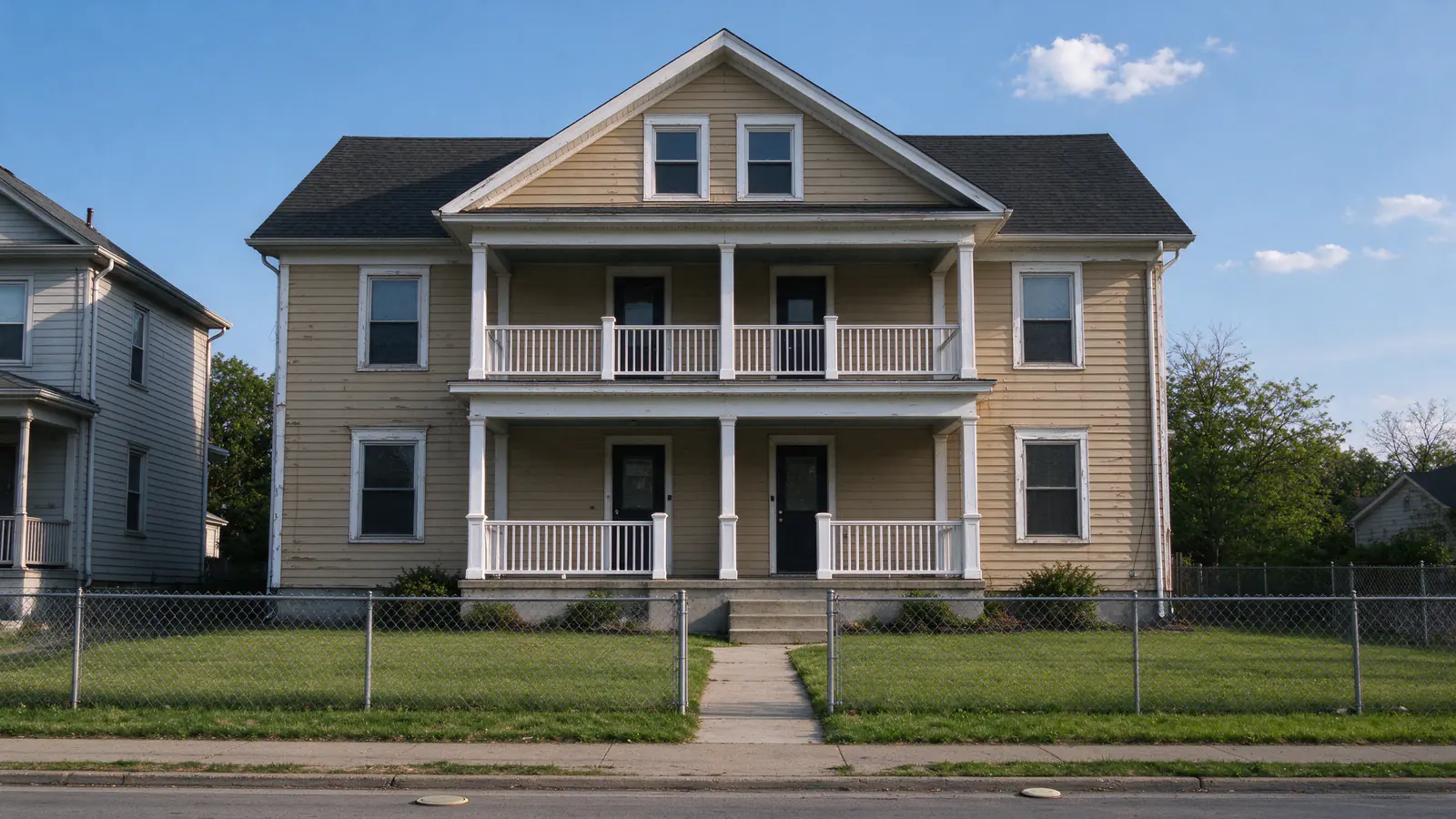
Knob and tube in your Norwood house?
Fuses that keep blowing, an inspection report from a purchase, or an insurer’s condition. At Conflux Cincinnati Knob and Tube we handle knob and tube replacement in Norwood, OH, from detached houses off Montgomery Road to three-families with people on every floor.
Norwood is a city of its own, with its own building department at 4645 Montgomery Road. So before we price a job, we confirm which office issues and inspects the electrical permit for your address.
What do we know about the permit route?
| Item | What applies in Norwood | How we confirm it |
|---|---|---|
| Building permits | Norwood Building Department, separate from Cincinnati’s | City’s own page |
| Electrical permit and inspection | Reportedly a city-contracted agency, named as Inspection Bureau, Inc. | Confirmed per address before the permit |
| Cincinnati contractor registration | Does not apply outside the City of Cincinnati | Norwood’s own requirements checked per job |
| Plans | Cannot be emailed, per the department’s page | Submission method checked with the department |
| Fees | Set by Norwood; increased effective January 2, 2026 | Confirmed per address |
We settle the electrical point before we price the work. We confirm the electrical inspector for your address with the building department first, and never assume it from Cincinnati’s arrangement with IBI.
It is a plausible arrangement. IBI says it works for Cincinnati, Hamilton County and 51 separate cities, villages and townships in Ohio and Northern Kentucky. Plausible is still not confirmed, and a permit opened with the wrong office costs time.
Is your house old enough to have it?
Very likely. Census estimates put 6,402 of Norwood’s 9,892 housing units, or 64.7%, in buildings from 1939 or earlier, against 40.3% for Cincinnati. Add the 1940s and the figure reaches 69.9%.
| Housing units | Norwood | Cincinnati |
|---|---|---|
| Built 1939 or earlier | 64.7% | 40.3% |
| Built before 1950 | 69.9% | 48.6% |
| Detached houses | 52.6% | 38.4% |
| Two-unit buildings | 11.5% | 8.5% |
| Three- and four-unit buildings | 16.1% | 12.1% |
The source is the Census Bureau’s 2019-2023 American Community Survey for Norwood as a whole; because Norwood is a city, no tract approximation is needed.
A high share tells us where to look. It doesn’t tell us what your house holds, because many have had panels changed and rooms rewired over the decades. Active versus abandoned K&T explains why one dead run says little about the rest.
Own a three- or four-unit building?
Then we plan around every household before we open any one floor. Norwood has a larger share of three- and four-unit buildings than Cincinnati, 16.1% of units against 12.1%.
The code line falls at four units. One- to three-family buildings follow the Residential Code of Ohio, a state code that applies in Norwood as anywhere in Ohio and has used the 2023 NEC since April 15, 2024. Four or more units, or a storefront below, put the building under the Ohio Building Code.
- Occupied floors. Every household keeps something powered while its own circuits are down. We agree with each one what that is, such as a freezer, a home office or medical equipment, and heat stays on in cold weather.
- Shared lighting. We trace and move stair and basement lights fed from one unit’s panel before any unit starts.
- Records by unit. Each floor gets its own circuit map and panel directory at the end.
Two-family and rental rewiring describes the sequencing in detail.
Getting quotes from more than one company?
Good. Ask each one the same questions. In Ohio, no one may act as an electrical contractor without a license from the Ohio Construction Industry Licensing Board, though state law also lets county commissioners license some contractors who don’t need a state license.
What should you ask anyone quoting in Norwood?
- Which license? Ask for the OCILB license number and check it with the board.
- Which office? Ask which office they will open the electrical permit with, and whether they confirmed it for this address.
- Which inspections? Ask when the rough-in will be inspected, so no wall is patched before it.
Hiring a K&T electrician in Ohio has a fuller checklist, and is knob and tube illegal in Ohio answers the question owners usually ask first.
Live in a detached house?
Then the job is usually simpler: one household, one panel, and an attic and basement that carry the runs. Norwood has proportionally more detached houses than Cincinnati, 52.6% of units against 38.4%.
How much wall do we open?
Where the attic is open, we can often reach ceiling circuits from above and drop new cable to each fixture box. Where the attic is finished or there is none, we come up from the basement through stud bays.
We write down a count of likely openings per room for your house before any price, and plaster-wall rewiring explains the methods.
Fuses keep blowing?
Don’t reach for a bigger fuse. In a house this old, the fuse box and the wiring can date from different eras.
A fuse sized larger than the wire it protects is one of the first things we check, because it lets an overloaded circuit run hot without blowing. That is the opposite of what you want from old wire.
Will a new panel solve it?
Partly. A new panel fixes the protection, not the branch circuits. Where a larger service is planned, the K&T behind the panel still has to be found and dealt with. Fuse box replacement and the guide to K&T and 200-amp service explain how the two decisions fit together.
What will it cost?
Conflux’s typical range is $12,000 to $35,000 and up for a whole house and $2,000 to $10,000 for a partial job. Norwood sets its own permit fees, which rose effective January 2, 2026; we confirm yours with the issuing office.
The larger part of your price comes from the house: the number of live circuits, the floors and units involved, plaster and access, and panel space. A knob and tube inspection produces that list, and whole-house rewiring covers replacing every circuit in one project.